
Missile Restocking Deep Dive — the five subsystems, the two that are scarce, and the dozen companies that own them
On a night in March, somewhere over the Gulf, a radar picked up an inbound track and a battery had ninety seconds to decide what it was. It could have been a ballistic missile with a warhead. It could have been a plywood-and-foam decoy built for ten thousand dollars for no purpose other than to make someone spend a million-dollar round on nothing. The battery could not tell, so it fired.
That decision, repeated for thirty-nine days, is why the United States is now trying to buy 188% more missiles than it bought last year — and why the interesting question is not who sells missiles, but who can actually build the two parts of one that money cannot conjure.
Five subsystems, two of them scarce
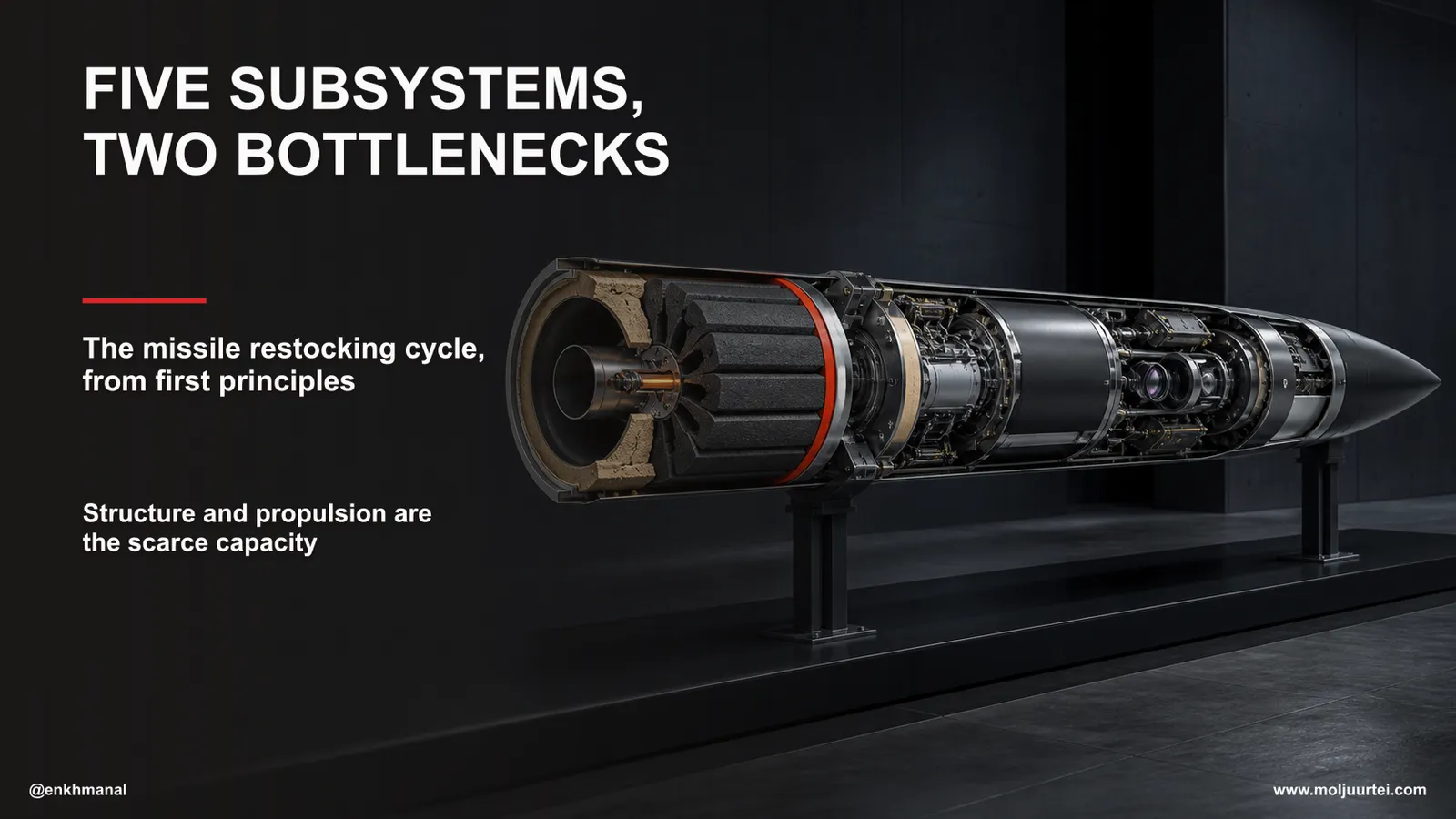
A guided missile is five subsystems, and the restocking cycle is not short of all five — it is short of two. Structure and propulsion are physically capacity-constrained; guidance, control and fuzing are not. That asymmetry, not the budget headline, decides where the money lands.
Those headline numbers need one piece of context to mean anything, and it is not the dollar figure. The FY2027 request asks for 3,203 PAC-3 rounds. The line that builds them currently produces roughly 600 a year, and the stated ambition is 2,000 a year by 2030. The request is more than five years of current output, ordered at once.
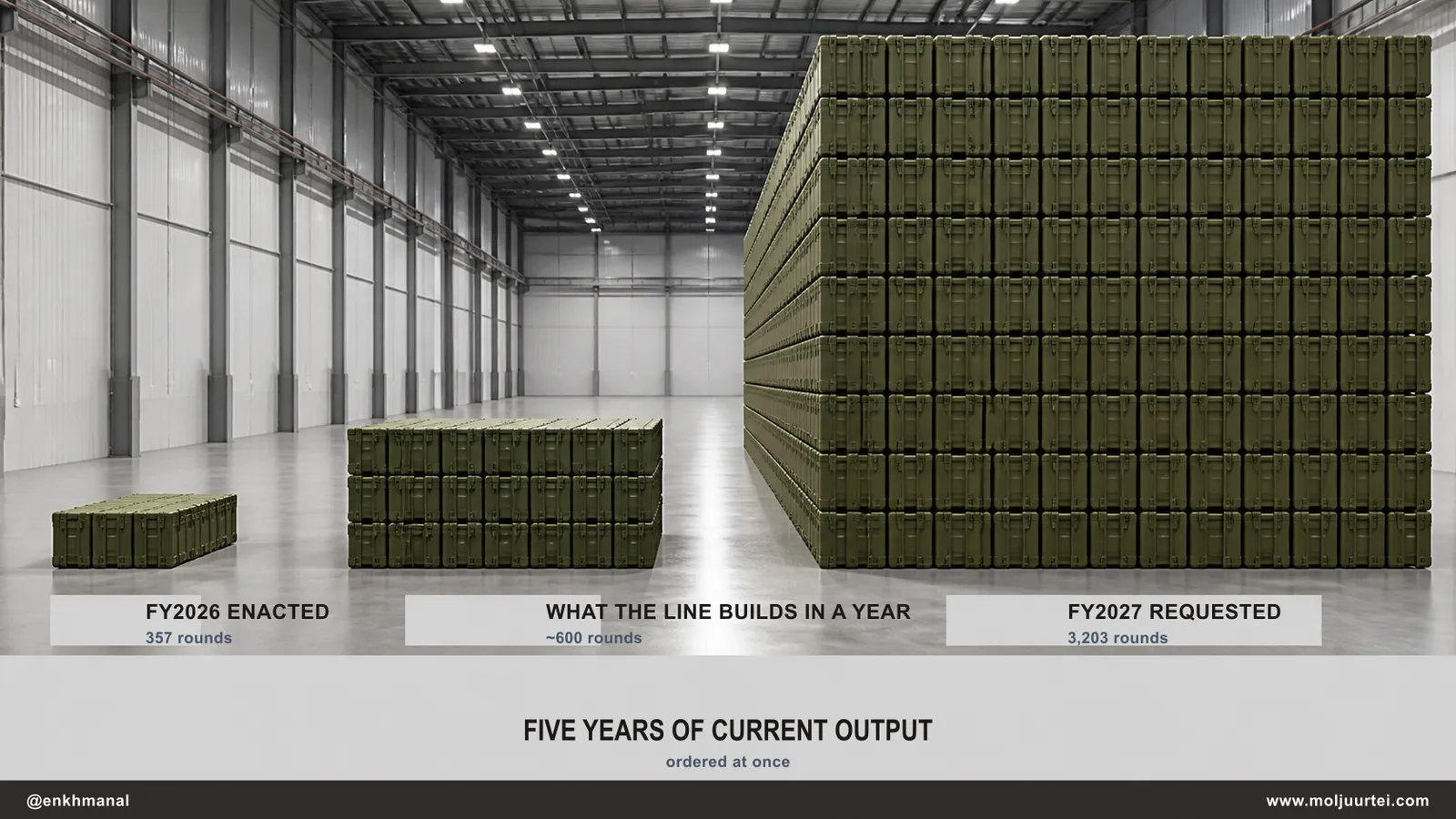
Solid rocket motors and seekers continue to be really significant bottlenecks, and I'm not sure that there's a dollar figure that can overcome those bottlenecks.
The exchange rate of modern combat
For thirty years the United States bought missiles the way you buy fire extinguishers: enough to satisfy an inspector, on the assumption you will never actually discharge one. Then came thirty-nine days against an adversary who could shoot back, in volume. Roughly half the prewar inventory of Patriot, THAAD and the Precision Strike Missile was expended.
The decoy costs ten thousand dollars. The round that answers it costs four point two million. In some months of 2025, open-source work on Russian salvo composition suggested 40-60% of launches were decoys — which means the cheapest way to disarm an air-defense network is to make it win, over and over, until the magazine is empty. That is not an air-defense problem. It is an accounting problem, and the accounting was always going to lose.
Meanwhile the supply side spent three decades doing precisely what it was told. In 1993, at a dinner the industry still calls the Last Supper, contractors were told the peace dividend meant consolidation. Fifty-one prime contractors became five. Solid-rocket-motor manufacturers went from six to two. Nobody was punished for this; it was the assignment.
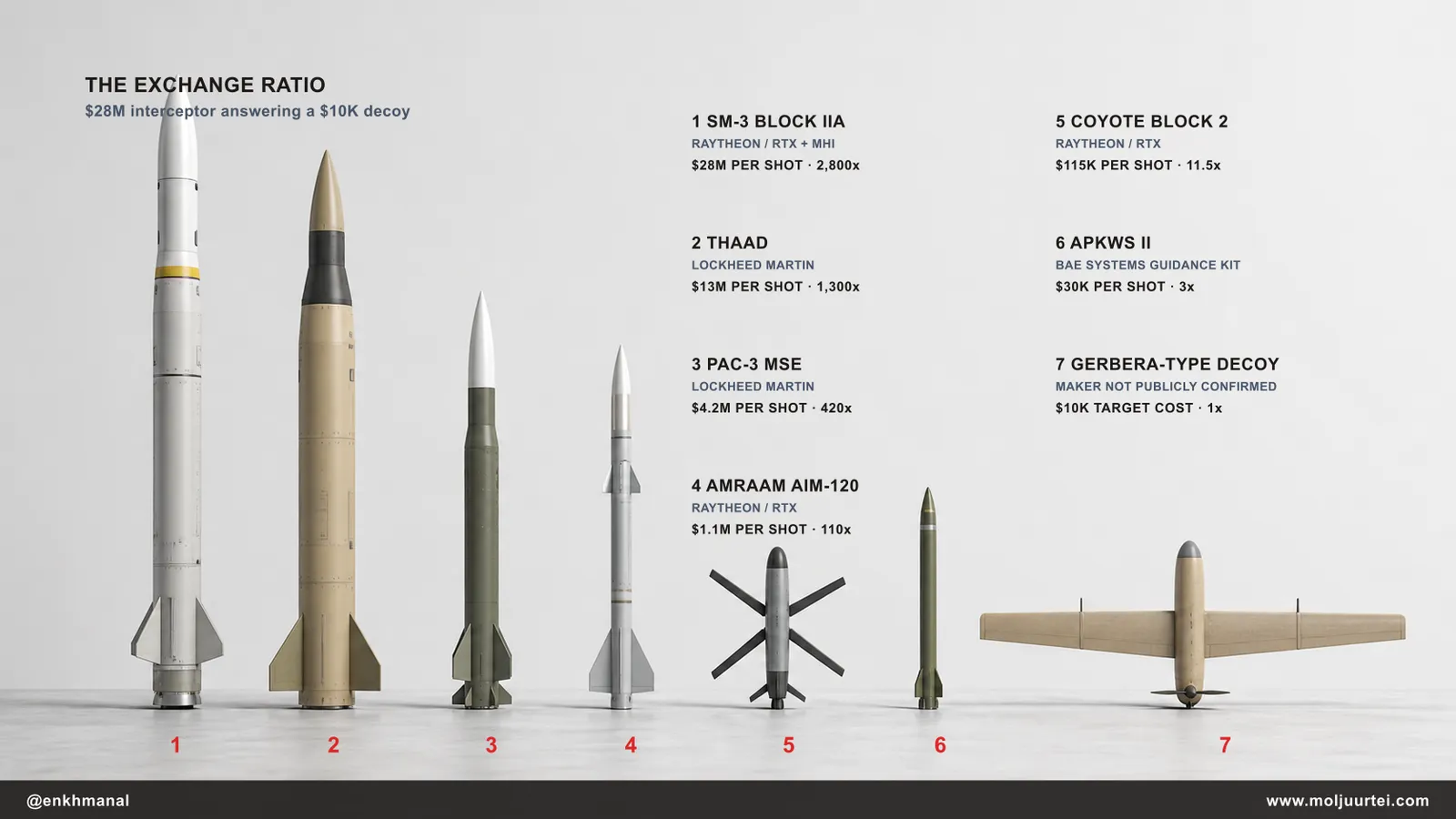
Read that ladder from the bottom up and the last thirty years of procurement policy stops looking like negligence and starts looking like a category error. The West optimised the top of the ladder — exquisite, precise, expensive, magnificent at destroying things worth destroying. The adversary optimised the bottom, then declined to present targets worth the top.
What a missile actually is
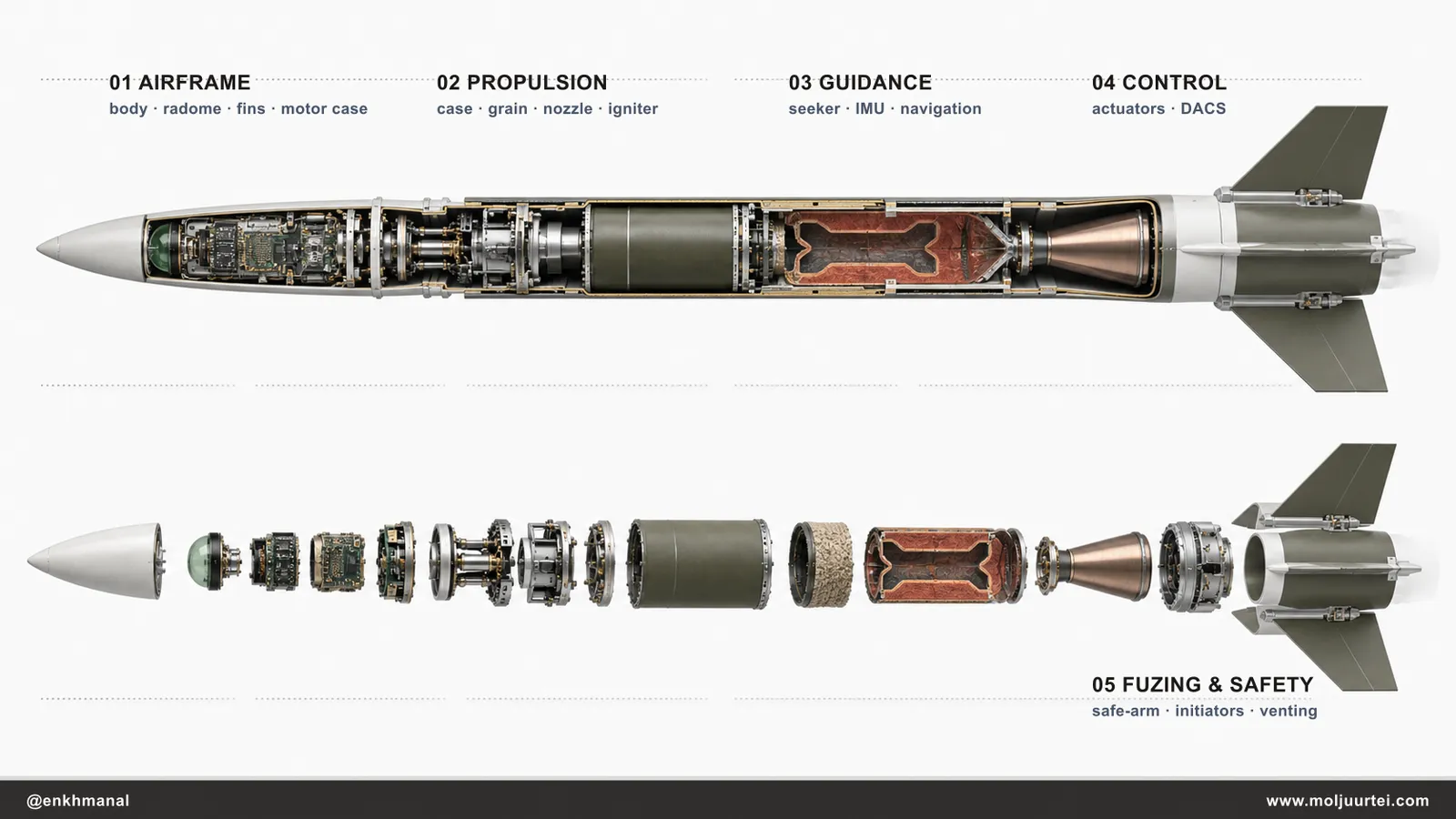
Strip away the acronyms and a guided missile is a tube that has to do five things: hold itself together, push itself somewhere, know where it is going, steer, and then do something on arrival.
Subsystems 3, 4 and 5 are electronics and precision machining, and America is extremely good at scaling those. Subsystems 1 and 2 are heavy structures and energetic chemistry, which need qualified physical plant, multi-year certification, and materials with one or two domestic sources. You cannot software your way to a motor case.
Why the money pools where capacity already exists
Congress appropriates, the service writes a contract, the prime places long-lead orders, and only then does a line begin. Historically that ran about 24 months. Lead times have stretched to 36 months or more. CSIS puts the total at roughly 52 months — over four years — from budget request to fielded missile.
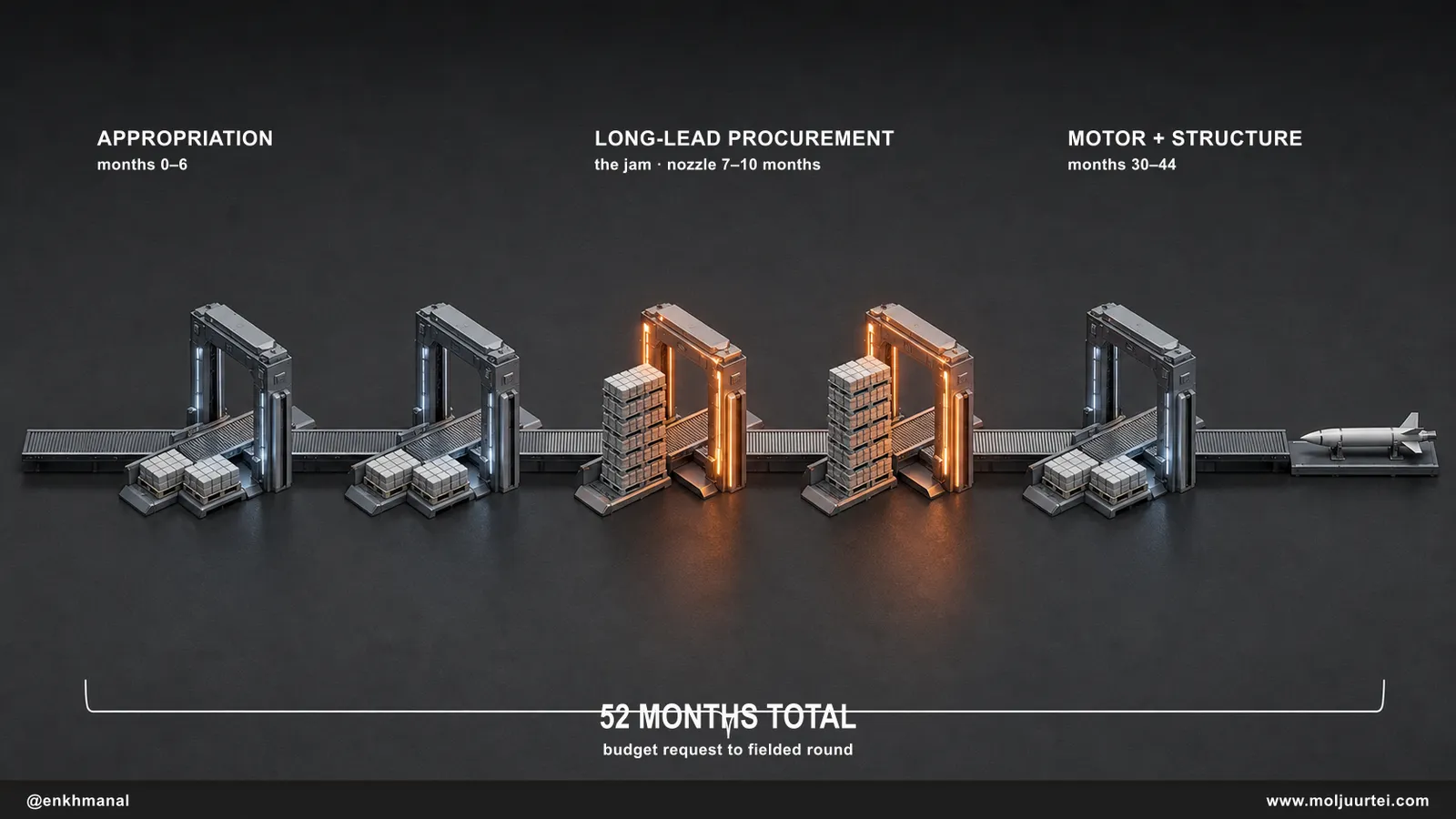
The dates line up into a single argument. In 1993 the industry was told the peace dividend meant consolidation, and fifty-one prime contractors became five while solid rocket motor makers went from six to two. THAAD then delivered its last interceptor in August 2023 and has delivered none since, with deliveries not resuming until April 2027. In April 2025 the Army quietly raised its PAC-3 acquisition objective from 3,376 rounds to 13,773. A year later the FY2027 request landed at $70.5 billion against $24.4 billion enacted. Applied Aerospace listed that June, raising $635.6 million and applying $626.2 million of it to debt. And in July the White House signed Executive Order 14415, obliging primes to qualify alternative domestic sources with waivers largely prohibited from 1 January 2027.
The prime signs fixed-price multiyear contracts and absorbs overrun risk. The sole-source supplier sells more units of the same qualified part, on a line it has already paid for, to a customer with no alternative and a legal deadline. One of those is operating leverage.
Who is actually fixing it
The motor market consolidated between 2000 and 2015 into Aerojet Rocketdyne — now inside $LHX — and the former Orbital Sciences motor business, now inside Northrop Grumman. Both are expanding. The more interesting move is that the government has been funding a cohort of new entrants: Anduril, X-Bow, Ursa Major, Firehawk and Castelion, alongside Nammo, Avio USA and Prometheus Energetics.
The seeker half is the more startling one. Boeing produces the active radar seeker for every single PAC-3 MSE from one facility in Huntsville, Alabama. Lockheed said publicly that this seeker was the primary constraint on reaching even 650 rounds a year — so the interceptor the FY27 budget wants 3,203 of is gated by one supplier's one plant.
The seeker response has been direct. On 1 April 2026 the department signed a seven-year framework with Boeing and Lockheed to triple PAC-3 MSE seeker capacity, alongside a parallel agreement with BAE Systems and Lockheed to quadruple THAAD seeker output. Then on 6 August 2026 the Army's DEVCOM C5ISR Center awarded $KTOS a contract to develop, manufacture and test a next-generation infrared seeker for the Javelin — explicitly to widen the supplier base beyond the traditional primes.
Both prongs run through the same physical inputs. Anduril's six thousand motors a year need six thousand motor cases, six thousand nozzles and the oxidizer to fill them — and a challenger building a line from scratch is more dependent on qualified merchant suppliers than an incumbent, not less. The listed way to own a fight between two incumbents and five insurgents is to own the layer all seven have to buy from.
How these names surfaced
Three filters, applied in order. One: sole- or single-source qualified on a named munition program, in structure or propulsion, where requalifying takes years. Two: the exposure has to be large enough or growing fast enough to move the whole company. Three — the interesting one — where has the market marked the name down for a reason that has nothing to do with missiles?
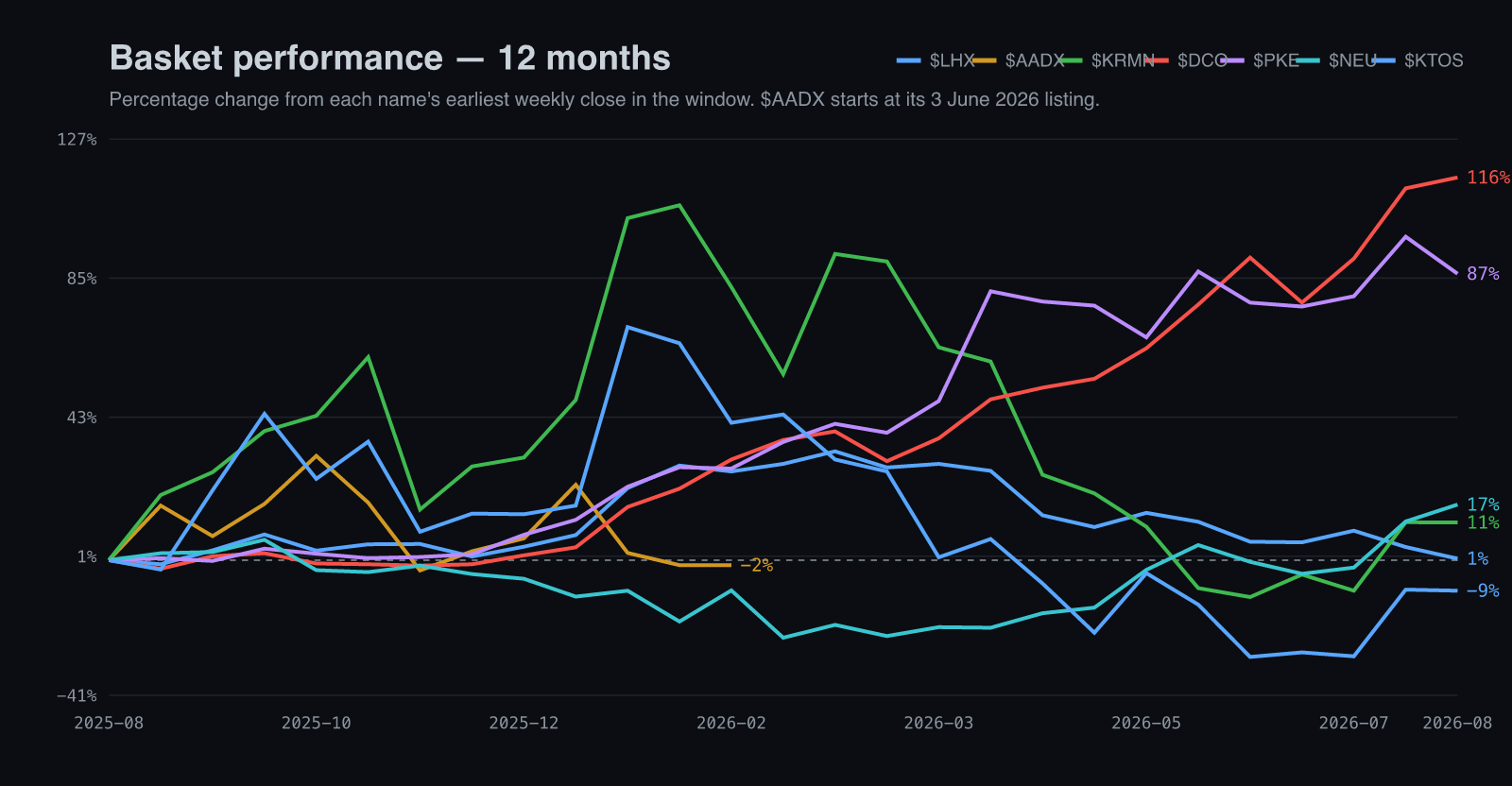
$LHX fell 26% because it delayed a corporate action. $KRMN fell 50% because it was swept into the unwind of the orbital-reentry space trade. $AADX fell below its own IPO price because of a non-cash accounting entry. Three de-ratings, none caused by the thing this memo is about — and only two of the three survived the valuation work at the end.
A name per subsystem
Applied Aerospace — the purest structure exposure
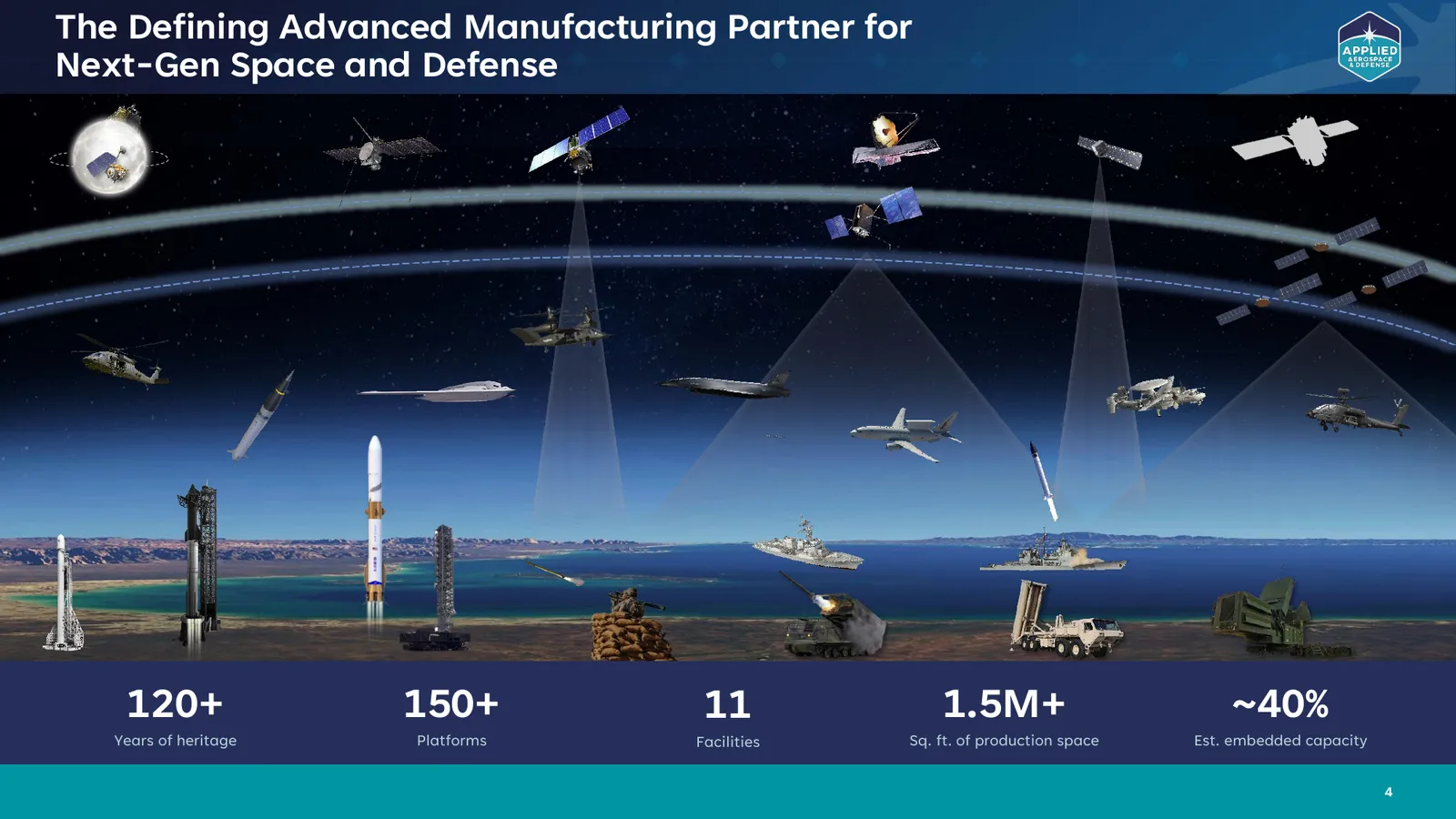
The prospectus supplies the moat in three lines: approximately 87% of revenue sits on sole-source or single-source awards, 88% of pro forma revenue is tied to intellectual-property-enabled production processes, and the average customer relationship spans 39 years. In flight hardware you do not change vendors over price; you change when the incumbent fails, and then you spend two years requalifying.
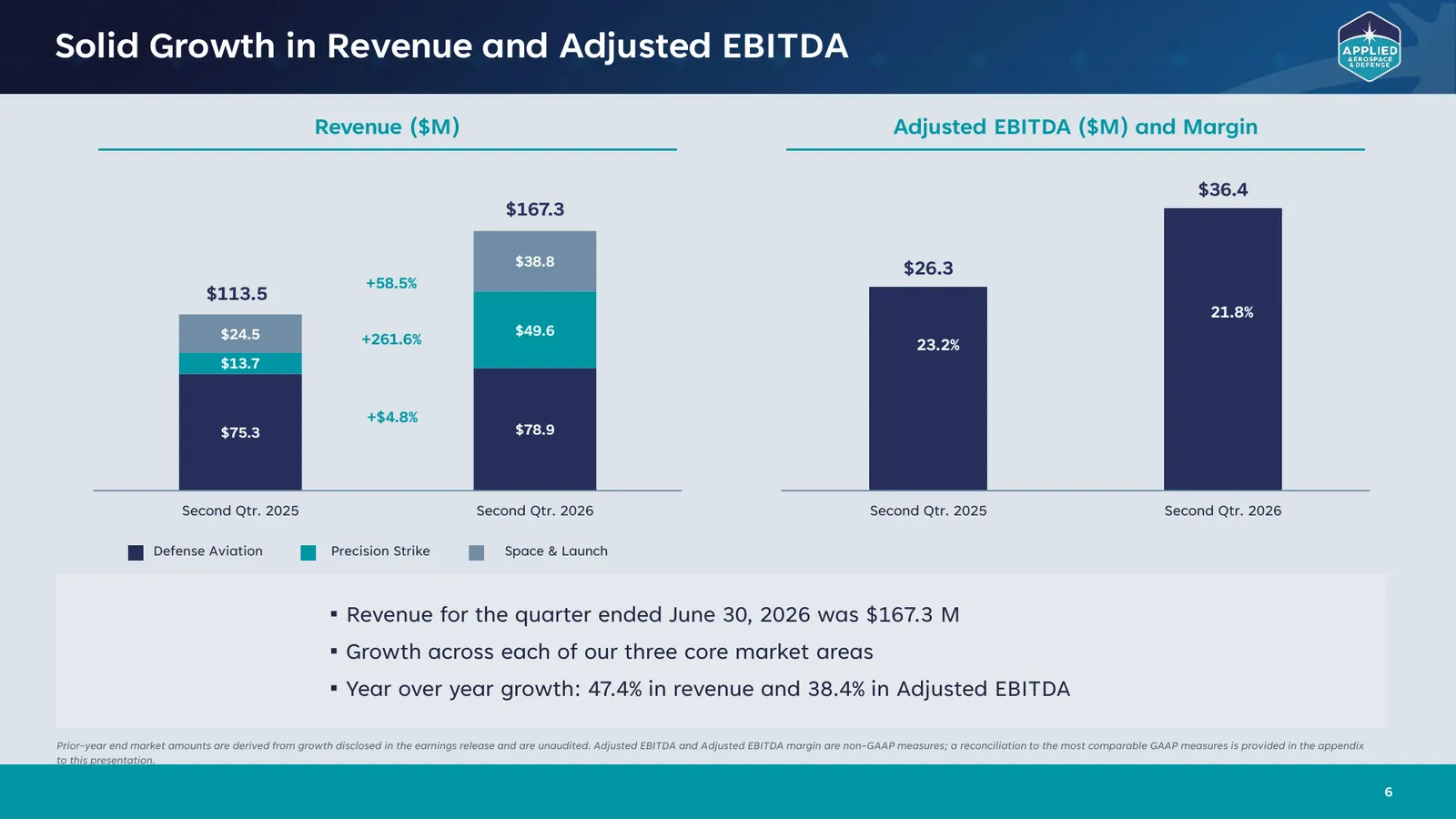
One correction matters. It is tempting to say the 600 basis-point gross-margin decline was the same accounting event showing up twice. It was not: the company discloses that $10 million of the charge landed in cost of sales, worth 0.6 points. Roughly 540 basis points of the decline is real, driven by mix as a low-initial-margin segment quadruples inside the revenue base.
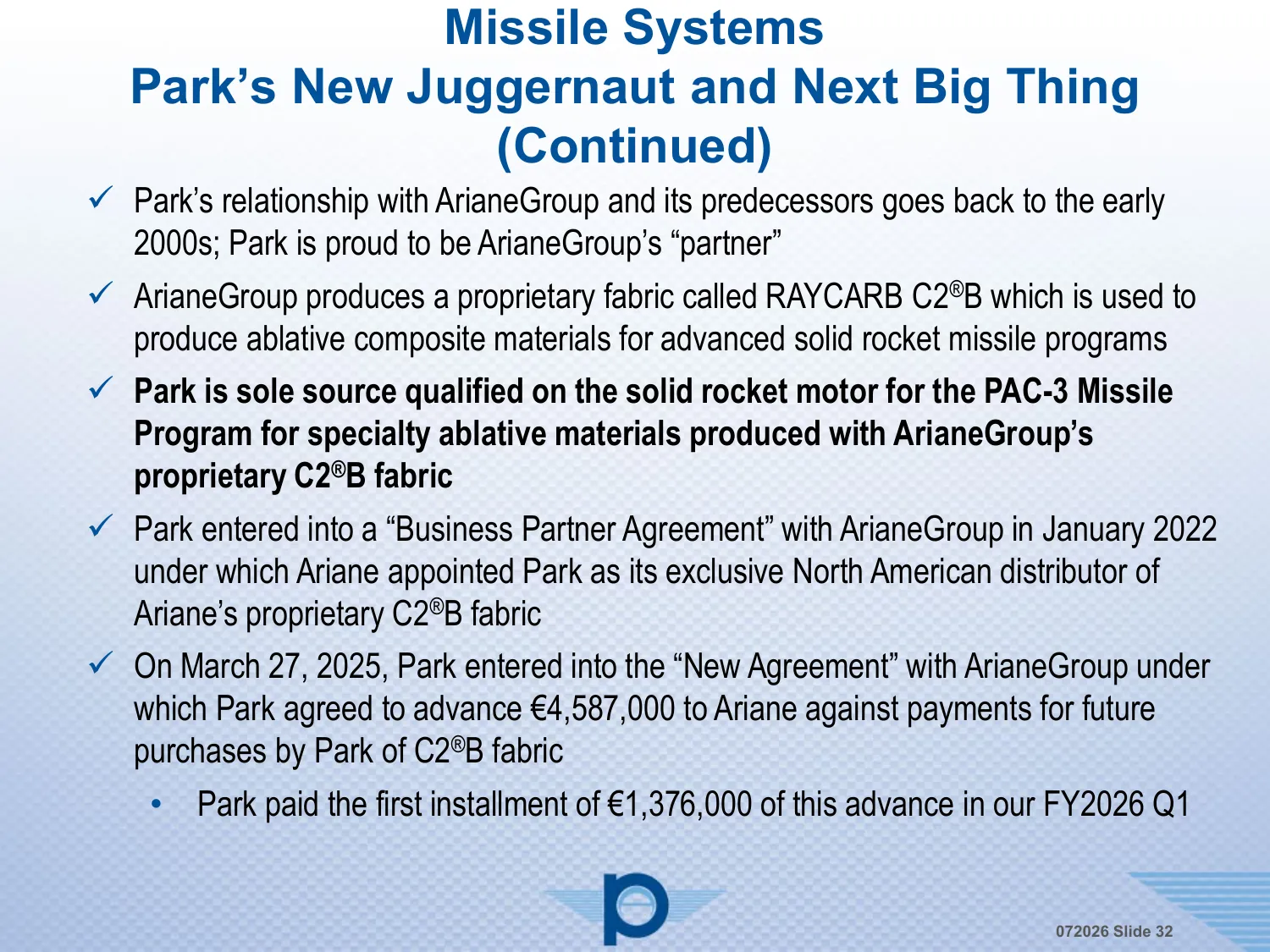
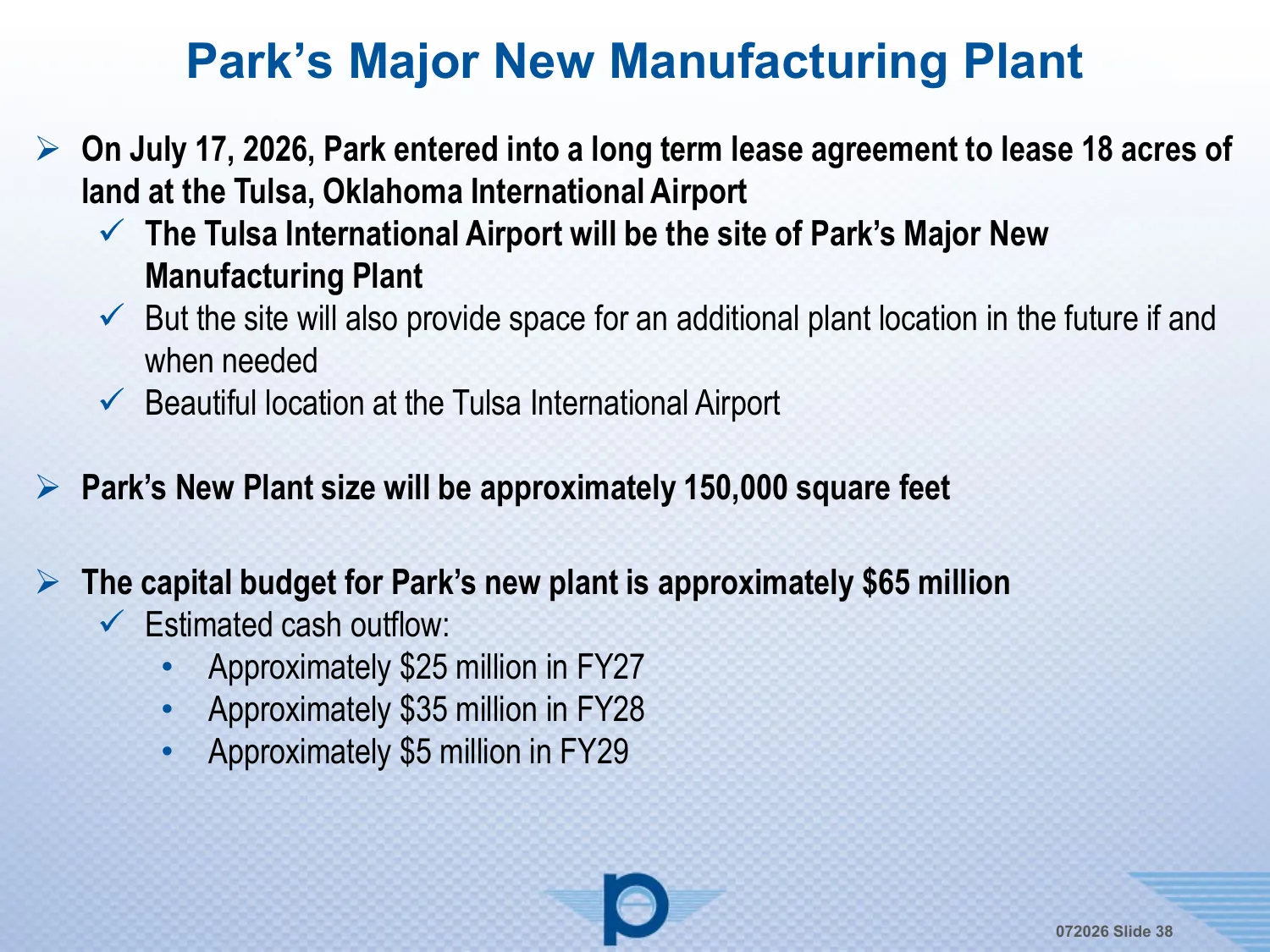
Karman, Ducommun and Park

We are scaling capacity to meet existing program requirements and simultaneously going on offense — winning alternative supplier positions on new programs and in new areas.
Winning alternative supplier positions is Executive Order 14415 showing up in a revenue line. But at 30 June the term note stood at $756.9 million against $51.7 million of cash — roughly $705 million of net debt, plus $102 million of finance leases. A widely repeated description of Karman as a net-cash business is a year out of date.
Ducommun's second quarter delivered revenue of $224.5M, net income of $18.4M (+35%) and adjusted EBITDA of $38.4M at a 17.1% margin, up 130 basis points, with remaining performance obligations at an all-time high of $1.2B. The missile franchise booked a book-to-bill above 4x in Q4 2025 — though company-wide it ran 1.1, and military and space revenue grew 7% last quarter.
Who actually runs these companies
Two clearly different groups. $DCO and $PKE are run by people who have been there for decades and whose record is visible in the financial statements — under Oswald, Ducommun's gross margin went from 21.9% to 26.9% over five years. $AADX and $KRMN are run by people installed within the last twelve months, with far bigger pedigrees and far less time in the seat. Neither is better; they are different risks.
Applied's entire senior team was installed between November and December 2025, roughly six months before the IPO. Hiring the former head of Harris Williams's aerospace and defense group as Chief Growth Officer is not how you staff a company that plans to run its plants quietly — it is how you staff a company that intends to keep buying.
What breaks it
When cost per shot goes to zero
Everything above treats the exchange-ratio problem as something you solve by making missiles cheaper. There is a second answer, and it is more radical: stop spending a missile at all. A high-energy laser has a marginal cost per shot of a few dollars of electricity, and its magazine depth is not a number of rounds — it is however long the generator runs.
On 9 July 2026 the Department of War awarded Joint Laser Weapon System agreements to nLIGHT Defense and Lockheed Martin Aculight — initial value $86 million against a program ceiling of $847 million. The Pentagon has separately deployed laser and high-power-microwave counter-drone systems across five US military bases, which is the tell that this has moved past demonstration.
Directed energy offers extraordinarily low cost per shot and naturally high magazine depth.
The honest limitation decides how much this displaces. A laser is line-of-sight and a weather instrument — fog, rain and dust stretch the dwell time needed to burn through a target, and every shot demands seconds of continuous tracking. Fielded classes run 20 to 50 kilowatts against Group 1 to Group 3 drones. So directed energy does not replace Patriot, THAAD or Standard Missile.
What it does is stop the exquisite tier being spent on the wrong targets. The magazine does not empty because adversaries have thousands of ballistic missiles; it empties because a battery with ninety seconds and no cheaper option answers a $10,000 decoy with a million-dollar round. Put a laser on that engagement and the ratio inverts.
The optics and laser names
$LPTH connects the two halves of this memo. Its BlackDiamond chalcogenide glass substitutes for germanium — a material on the Chinese export-restriction list that the July executive order bars from defense procurement from January 2027 — and the Defense Logistics Agency has funded a second phase qualifying additional BlackDiamond glasses for DoD systems. Most of the critical-minerals trade bets on someone eventually mining a restricted material inside the West. LightPath's bet is that you can stop needing it.
The floor under everything
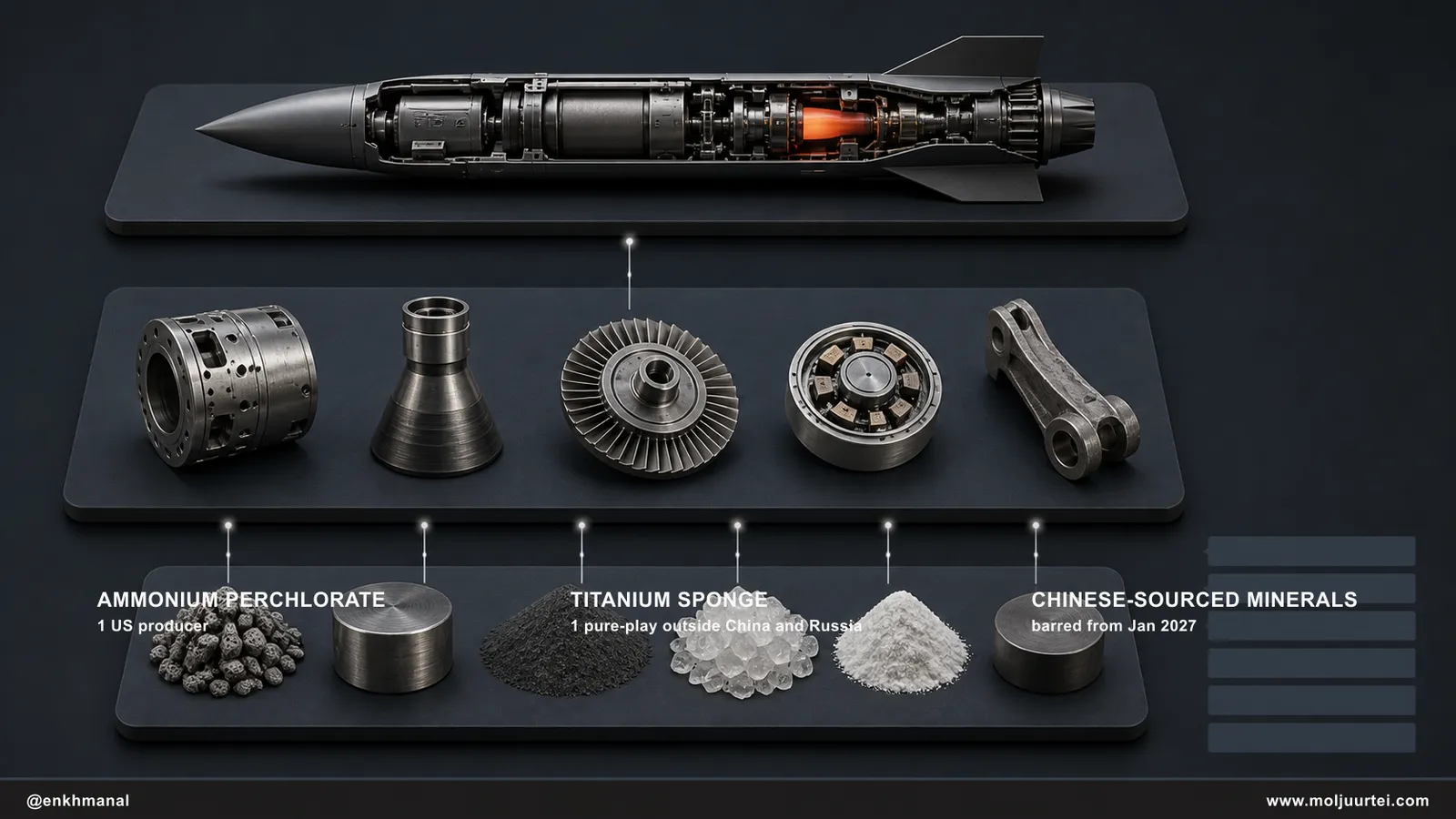
NdPr oxide prices have roughly doubled since 2024 and tungsten has tripled. The White House order of 20 July bars Chinese-sourced critical minerals from defense procurement beginning January 2027, with contractors required to fund active qualification of alternatives merely to obtain a temporary waiver. The policy does not merely prefer domestic material; it makes domestic qualification a budget line at every prime in the country.
Where the tape marked it down
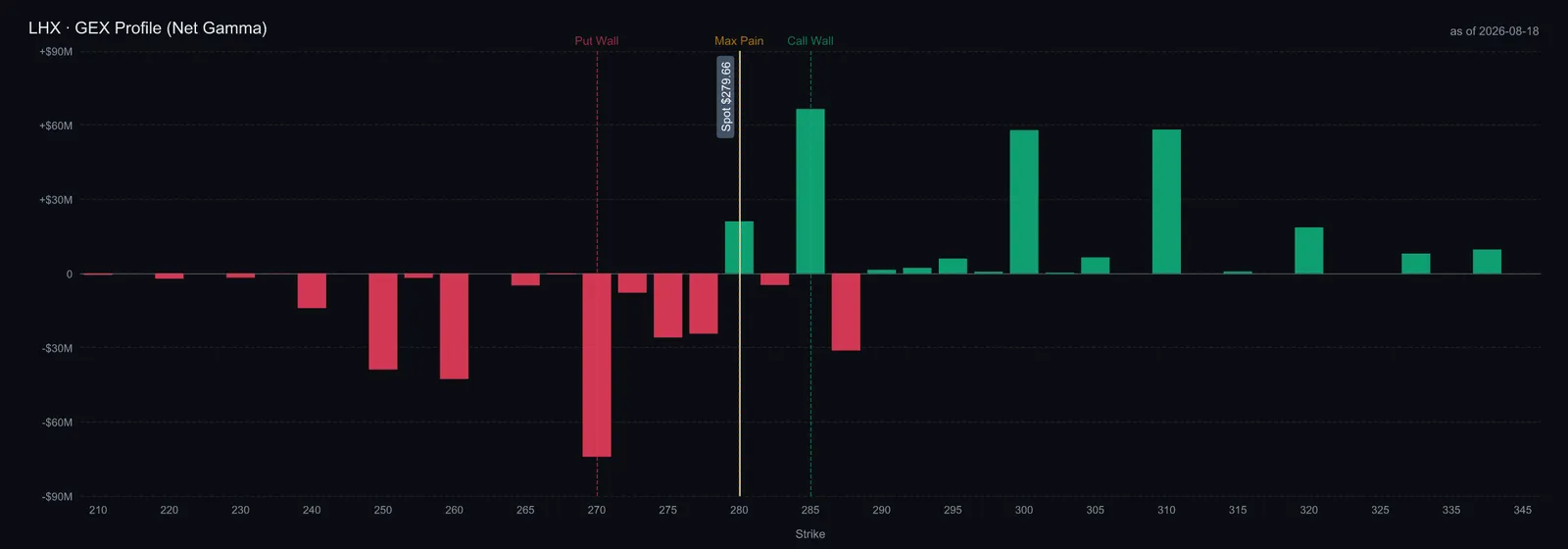
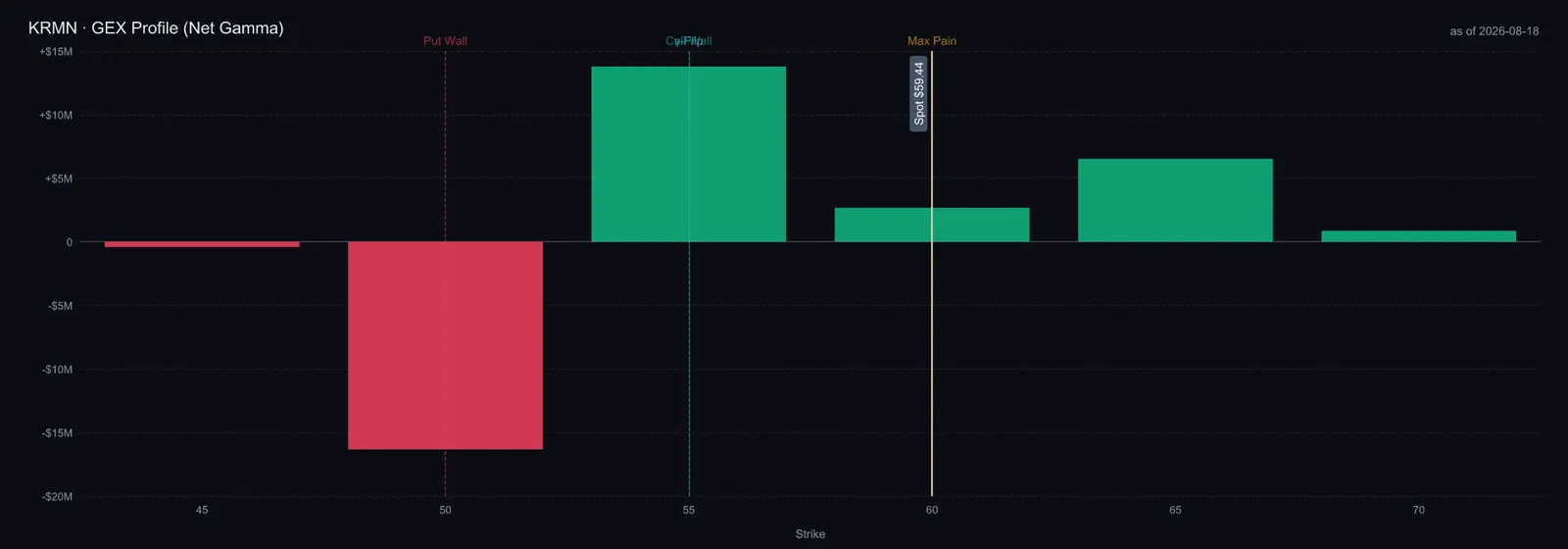
The options market adds a layer the price chart cannot. $LHX sits with dealer positioning close to neutral, the call wall at $300 and the put wall at $270 — so $270 is where the market is questioning the thesis, and a reclaim of the 200-day near $316 is the confirmation.
What the market pays, and for what
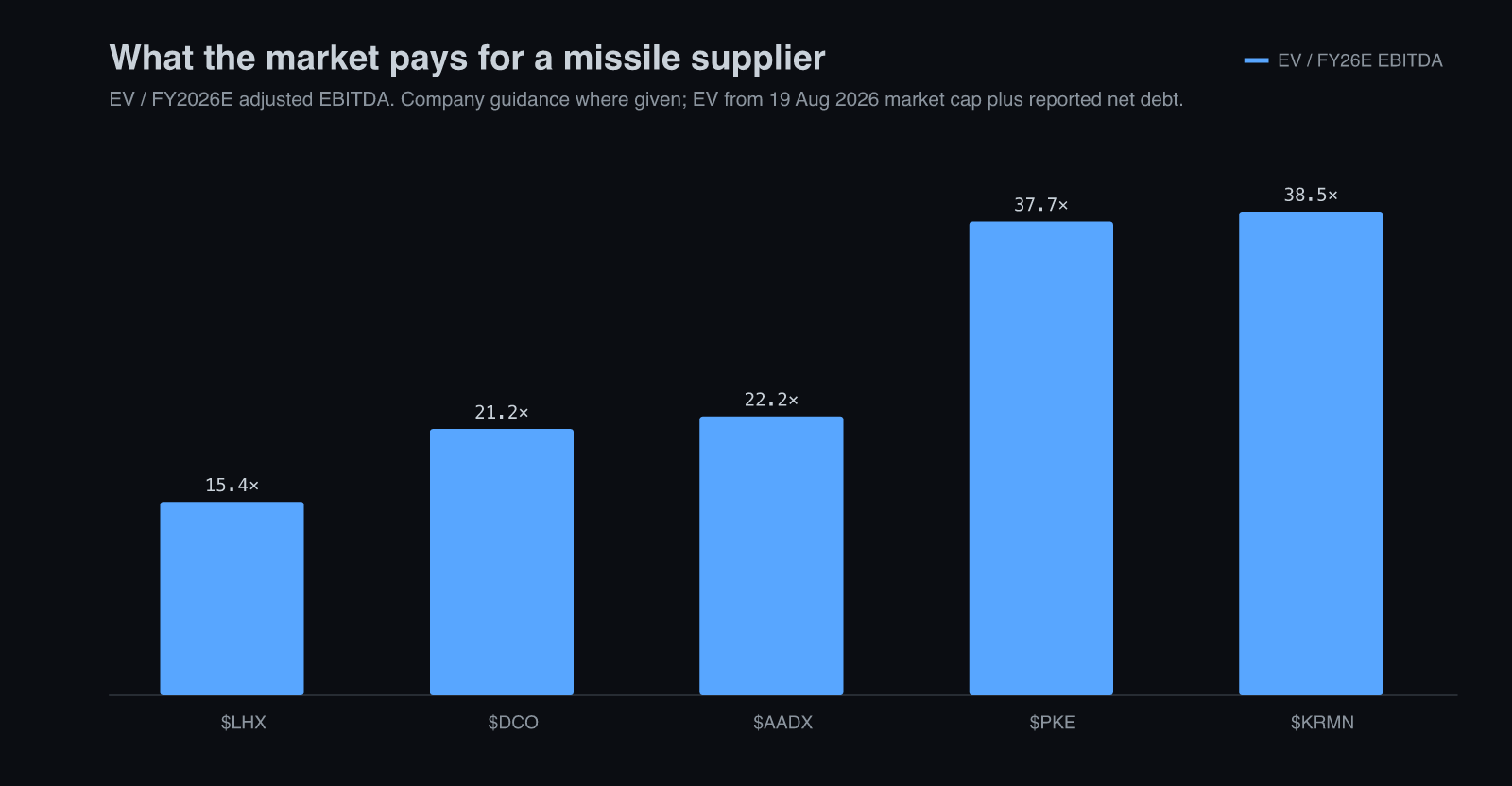
Multiples here are context, not a verdict. A supplier at 38x forward EBITDA growing revenue 58% with an order book up 65% is not obviously worse than one at 21x growing 7%. What matters is whether the business is real, whether the tailwind is durable, whether growth is accelerating, and whether the price is confirming — the multiple only says what you are being asked to pay for that.
Read that across rather than down and the ranking writes itself. The cheapest name has the weakest chart. The most expensive name has the strongest growth and a price that has just turned. And the name with the best fundamental story is the one the tape has not yet confirmed.
$KRMN is the first position — the opposite of where a multiple-first process would put it. Revenue up 58%, adjusted EBITDA up 55% at a 30% margin, backlog up 65% to a record, guidance raised, and a stock that has reclaimed its 50-day by 13% with the 200-day still overhead. Solid growth, thematic tailwind, price inflecting. It is expensive and carries $705M of net debt, and both belong in the risk section rather than the veto.
$DCO is second: a clean uptrend above both averages, remaining performance obligations at an all-time high, EBITDA margin up 130 basis points. $AADX is the highest-conviction fundamental story and the one to scale into rather than lead with — the tape has not confirmed it. $LHX is the cheapest asset attached to the most constrained component, and it is below both averages: buy the reclaim, not before.
The FY2027 budget bought four years of demand at a stroke, but nobody has yet bought four years of nozzles, motor cases and ammonium perchlorate. That is still available, and it is still mostly unpriced.