Arcturus — delivery chemistry meets its clinical test
A strand of messenger RNA is an instruction, not a finished medicine. It must reach the right cell, escape its protective particle and cause enough useful protein to be made without unacceptable harm. Arcturus ($ARCT) is trying to make that sequence repeatable in the lung and liver. The opportunity is chronic replacement of missing proteins; the constraint is whether delivery remains tolerable and produces meaningful clinical benefit after repeated dosing.
What Changed — a new liver candidate, not yet a human breakthrough
On September 23, Arcturus introduced LUNAR 2.0 and ARCT-2601, a next-generation OTC-deficiency candidate it plans to add to its ongoing Phase 2 programme. It also updated ARCT-810 human data and announced a definitive agreement to acquire myNEO Therapeutics, expected to close in October. This supersedes the old memo’s pending September liver catalyst and its picture of a narrowly fixed two-asset pipeline. The acquisition was announced, not completed, as of September 26.
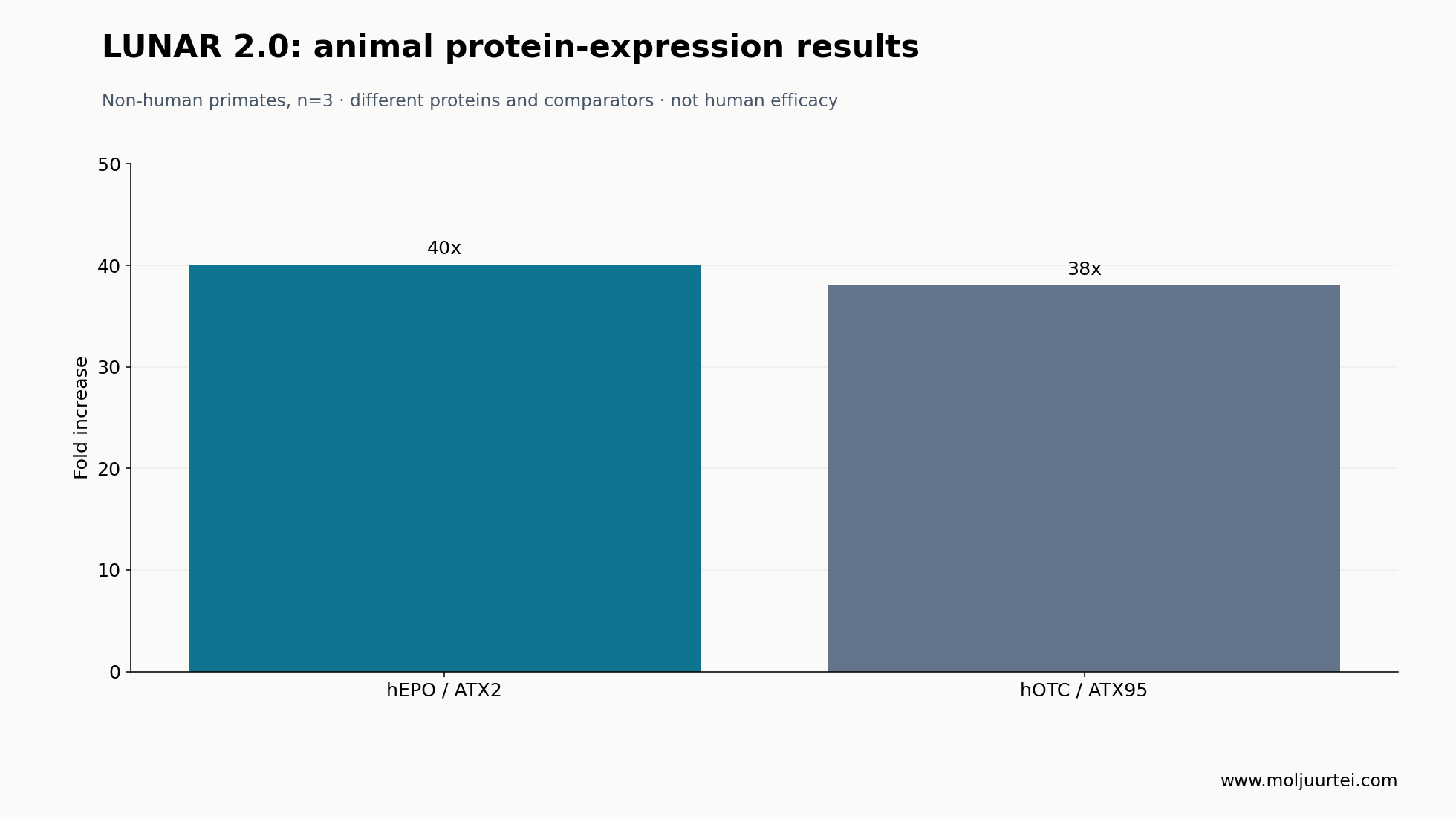
The new delivery results are preclinical: in small non-human-primate studies, LUNAR 2.0 produced 40-fold more hEPO than an ATX2 comparator and 38-fold more hOTC than ATX95, the lipid used in ARCT-810. Different proteins and comparators were tested, with n=3; these are not 38–40-fold improvements in patients, survival or disease control, and they do not establish ARCT-032 lung efficacy. The proposed advantage is higher expression and faster lipid clearance, which now needs human confirmation.
Thesis — the carrier can be valuable without the evidence being conclusive
RNA vaccines established that an instruction delivered into the body can produce useful protein and immune protection. But chronic therapy presents a different engineering problem: the right tissue must be reached repeatedly, the particle and impurities must not create unacceptable inflammation, and enough protein must reach its functional location. Vaccines can also require repeated doses; they are not simply a one-shot exposure where inflammation is always beneficial. Route, formulation and exposure schedule matter.
Vertex’s May 2026 discontinuation of VX-522 after persistent tolerability issues shows how difficult inhaled mRNA is. Efficacy was not established. It does not prove Arcturus has solved the same problem, identify a single proven molecular cause, or make ARCT the only remaining competitor. ReCode’s RCT2100 is another inhaled CFTR-mRNA programme; gene-delivery approaches such as 4D-710 are additional competing routes. The investment case must stand on ARCT’s own clinical data.
At the September 25 close of $13.85, equity value is about $393.7M. Subtracting reported June cash gives roughly $202.2M before lease liabilities. That is a price for uncertain development programmes, not evidence that the market values them at zero. A durable clinical signal could unlock a partner, larger trials and eventual recurring treatment revenue. Waiting for that signal reduces scientific uncertainty but could mean paying a higher price; entering earlier accepts the possibility of substantial permanent loss.
Business & Backdrop — collaboration revenue is not a commercial drug franchise
Founded in 2013 in San Diego, Arcturus combines RNA design, manufacturing and lipid delivery. KOSTAIVE provides an approved vaccine precedent in select jurisdictions, while the rare-disease drugs remain investigational. Its historical revenue is predominantly collaboration and grant income. The terminated CSL arrangement once included a $200M upfront payment and large contingent milestones; those historical headline milestones should not be carried forward as collectible assets.
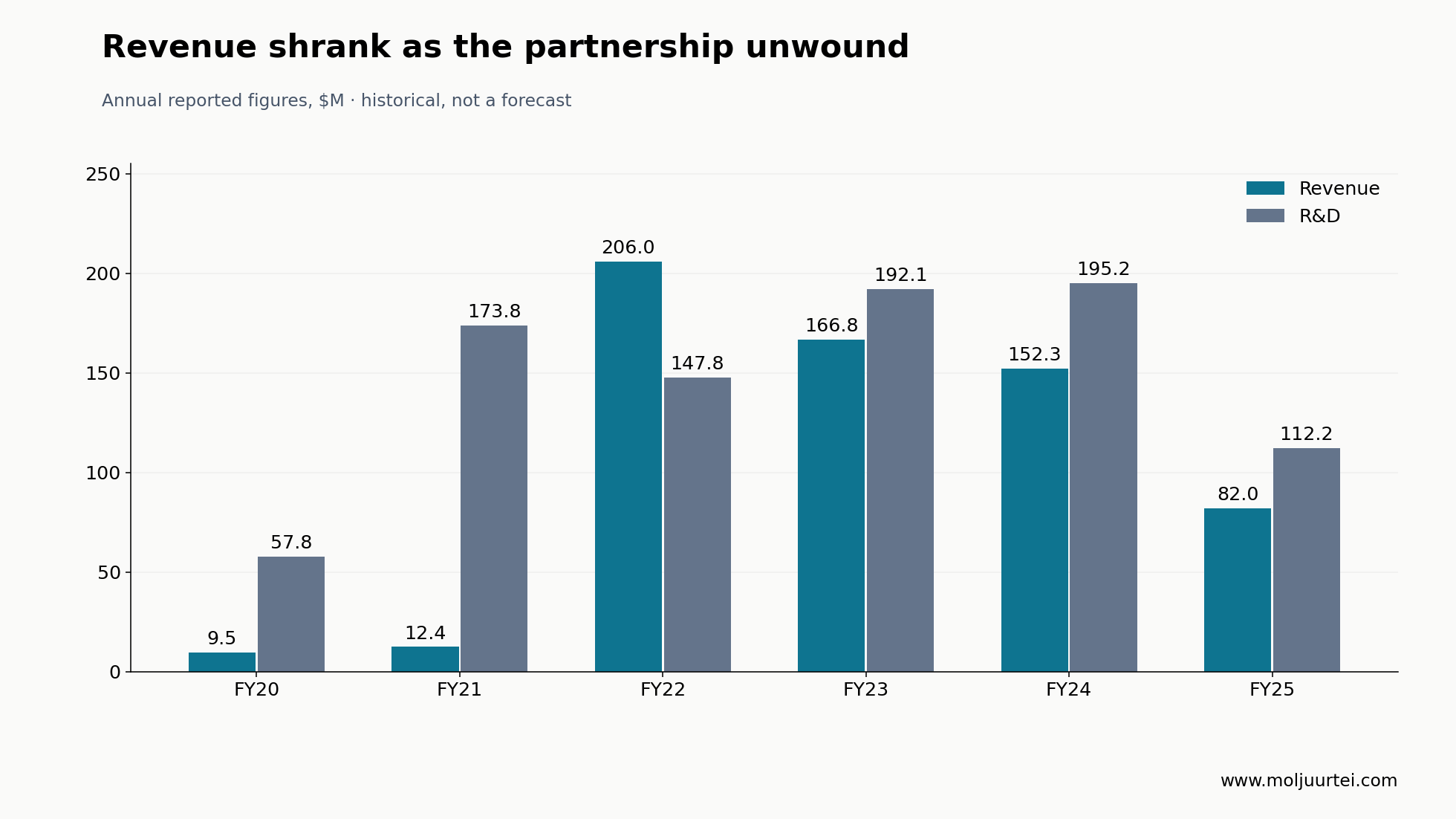
There is no conventional product gross-margin comparison here: collaboration and grant revenue is not a recurring product-sales base. FY22 profitability reflected an upfront payment, not demonstrated commercial operating leverage. R&D fell from $195.2M in FY24 to $112.2M in FY25, then $39.0M in H1 2026. That buys time, but it also changes the pace and breadth of development; lower expense alone is not a moat.
Q2 2026 revenue was $2.959M: $0.880M collaboration income and $2.079M grants, approximately 29.7% and 70.3%. Grants now dominate this small quarter, but are conditional funding, not guaranteed perpetual revenue. Q2 R&D was $17.5M, G&A $11.0M and net loss $23.8M. The old $8M Q3 estimate has been removed rather than presented as reported revenue or current consensus.
H1 operating cash outflow was $39.351M against a $50.749M net loss; $8.556M of stock compensation and working-capital movements explain much of the difference. Capital expenditure was zero. Unrestricted cash fell from $230.909M to $191.483M; cash including restricted balances fell by $39.283M. These are different measures. Annualising operating cash use gives $78.702M, implying about 2.43 years against June unrestricted cash before new spending or financing. Management’s August year-end-2028 runway guidance depends on its plan and does not settle the cost of September’s expanded pipeline or the myNEO acquisition.
Class I cystic fibrosis and OTC deficiency are small, underserved populations; management cites roughly 10,000 potential patients for each broad opportunity. These are not immediately reachable paying customers. Mutation eligibility, geography, diagnosis, clinical benefit and reimbursement narrow the addressable population. CF supportive care and OTC protein management, nitrogen scavengers and transplantation already exist. A high list price for another orphan drug is not a justified net-price assumption for ARCT, and patients should not be described as having nothing to take.
Technology & Moat — deliver the instruction, then prove the function
CFTR is a cell-membrane channel that helps regulate chloride and water movement. When it is missing or dysfunctional, airway mucus becomes difficult to clear. Modulators help certain faulty proteins function, but cannot reliably rescue a protein that is absent. Class I includes nonsense, frameshift and splice defects with little or no functional protein; it is not one uniform mutation. ARCT-032 supplies conventional mRNA intended to let airway cells make functional CFTR. Delivery into a cell is only the first step: the protein must reach the membrane, work and improve outcomes.
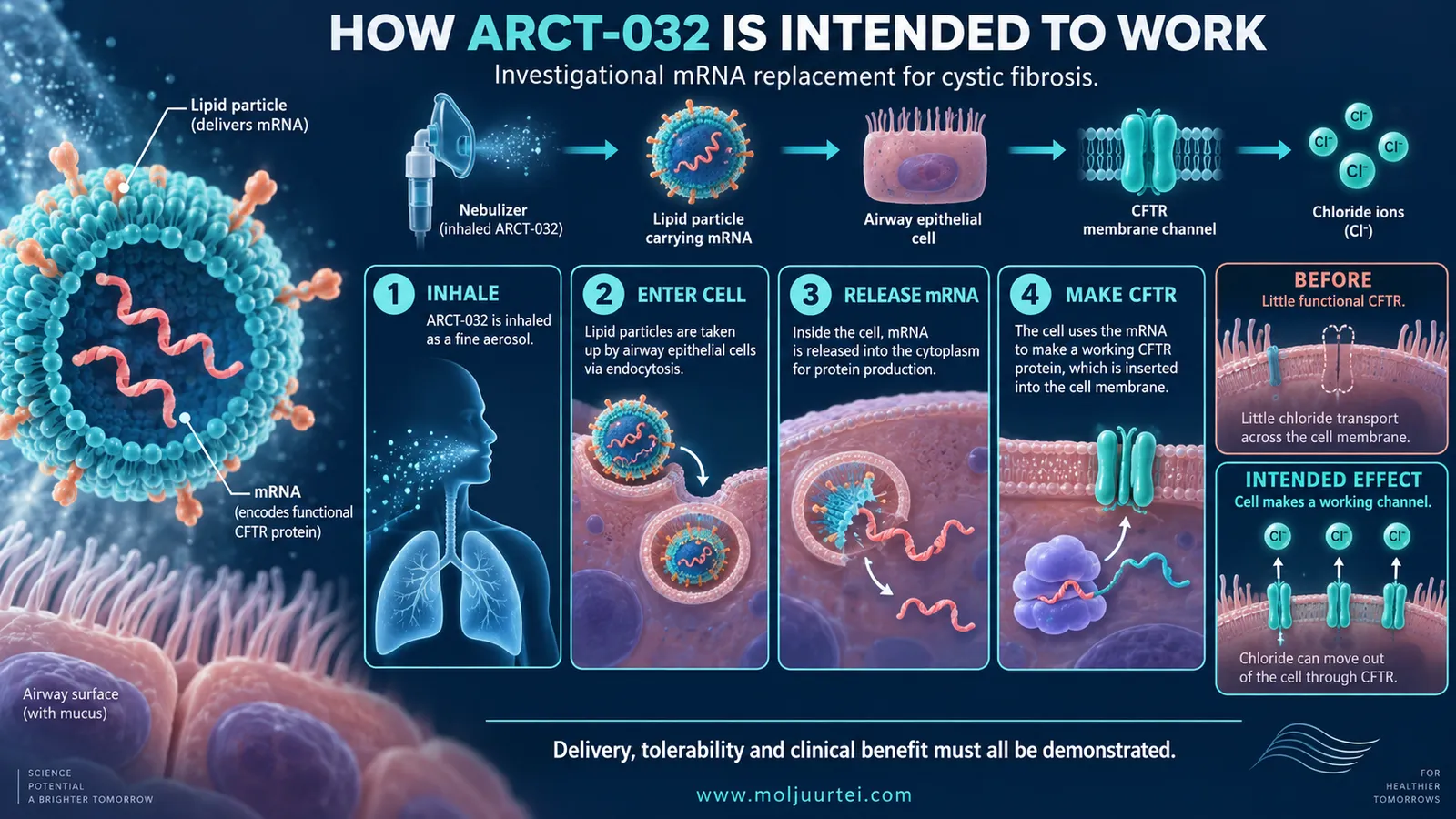
LUNAR formulations combine ionisable lipids and other components to protect RNA and aid delivery. Management emphasises biodegradable lipid chemistry, impurity removal and manufacturing know-how. Thiocarbamate chemistry is not the absence of carbon: these are organic molecules. Nor has a head-to-head human trial proved that a competing carrier accumulates while LUNAR always clears safely between doses. Patents, trade secrets and process reproducibility can matter commercially, but repeated-dose tissue exposure, inflammation and efficacy must be measured rather than inferred from chemical labels.
ARCT-032 and ARCT-810 use conventional mRNA; STARR is the self-amplifying vaccine platform. The tissue routes and lipid formulations differ, so one successful vaccine or liver experiment does not validate the inhaled drug. The company reports more than 50 ARCT-032 participants exposed, with regimens including up to 15 mg daily for 28 days and home administration without steroid pretreatment. That is useful feasibility experience, not proof that all 50 took that maximum regimen, that lifelong dosing is safe, or that regulators approved the medicine.
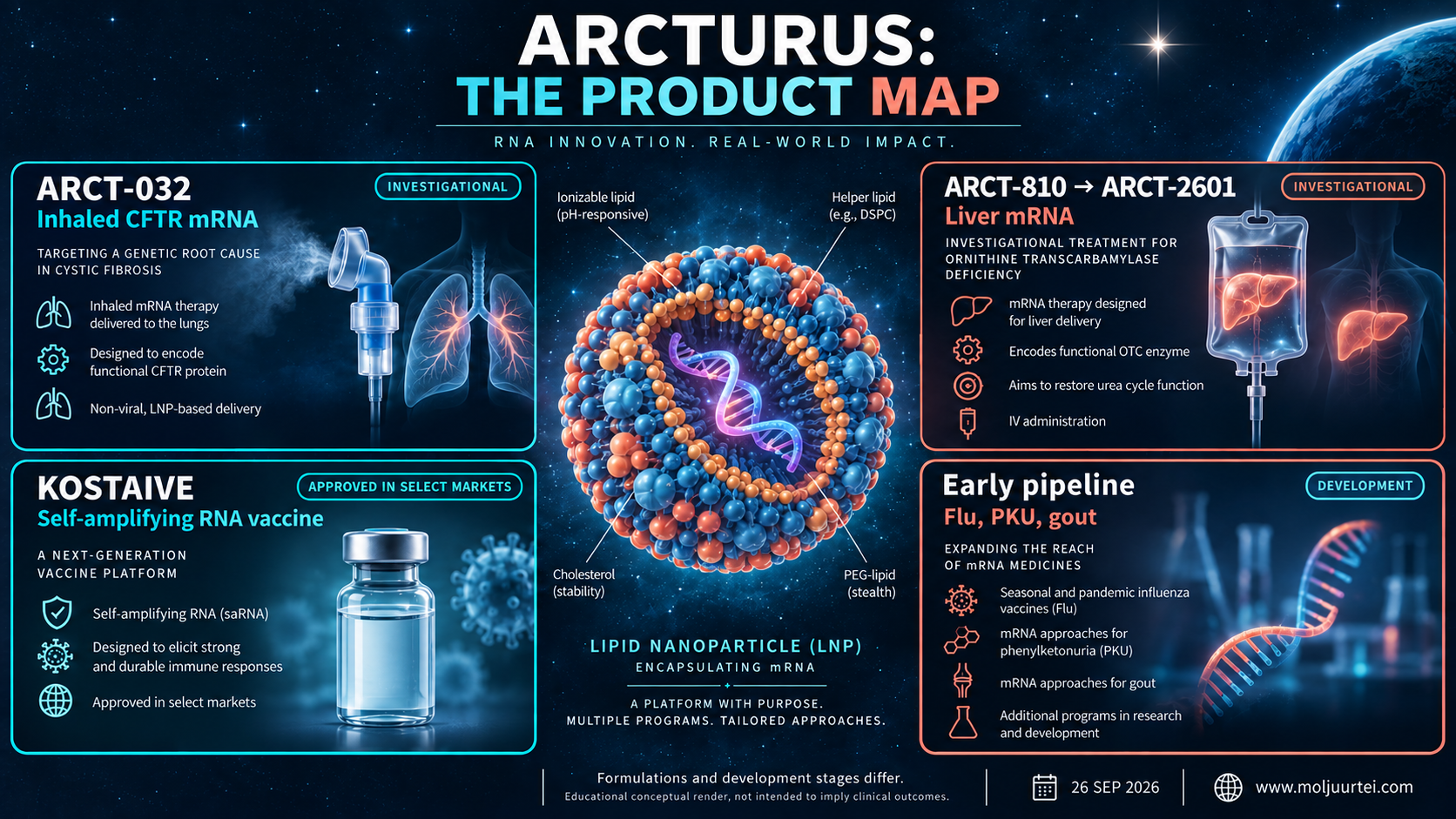
The nominal RNA dose comparison is striking: 10 mg equals 10,000 micrograms, versus KOSTAIVE’s 5-microgram dose, a 2,000-fold difference per administration. If daily treatment continued for a full year, nominal material per patient-year would be 730,000 times one vaccine dose. This is arithmetic, not a forecast of actual maintenance dosing, manufacturing revenue or margin: process yields, formulation, price and treatment duration differ.
Roadmap & R&D — the September roadmap replaces the old calendar
Table terminology: IV; IND; OTC.
The company says June FDA Type C feedback supports using platform data and amending the ongoing Phase 2 study for ARCT-2601. The intended first cohort has elevated baseline ammonia. A Q4 IND and near-year-end dosing remain plans, not authorisations already obtained. The H2 2027 paediatric study is conditional. Earlier ARCT-810 work is informative but a new formulation cannot inherit demonstrated long-term human safety by assertion.
Thermo Fisher’s agreement provides up to $40M of clinical manufacturing services, while Arcturus commits to engage PPD for up to $40M of CRO services. These are not $40M of unrestricted cash and not a fully funded Phase 3. Commercial manufacturing exclusivity is tied to a future approval, with supply-related exceptions. Management’s roughly $80M Phase 3 budget is an estimate. A sophisticated supplier’s diligence supports commercial feasibility; its potential future manufacturing business also gives it an incentive to sign, so the contract is not independent clinical validation.
ARCT-2304’s H5N1 Phase 1 and completed BARDA-funded work remain optional assets; August guidance contemplated Q4 EMA scientific advice. Scientific advice is not marketing approval. KOSTAIVE rights returned after the CSL termination, subject to existing Meiji arrangements for Japan’s 2026–27 season. The $12M settlement was expected in Q3, and approximately $16M of liability relief and credits are not an additional $16M cash receipt. New net economics and US regulatory requirements need evidence, rather than an assumption that removing CSL mechanically increases profit.
myNEO adds computational antigen and mRNA design capabilities after a collaboration dating to 2024. The September announcement did not disclose transaction economics. PKU and gout broaden early liver ambitions. These are discovery options with development costs, not approved oncology or metabolic products, and not near-term sales to put into a revenue forecast.
The Setup — separate feasibility from clinical benefit
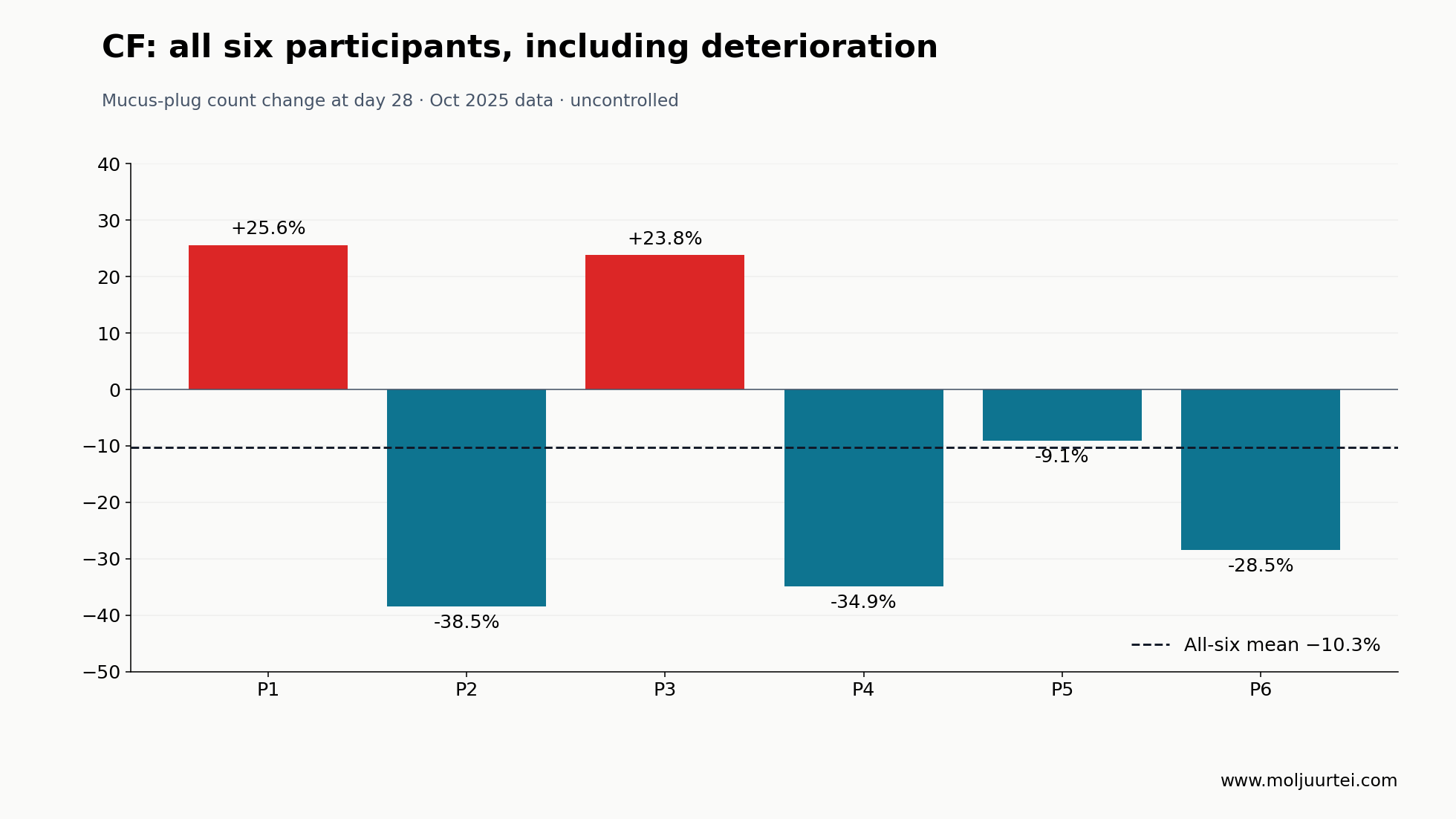
The original six-patient Cohort 2 is historical evidence, not a September 2026 readout. Plug-count changes were +25.6%, −38.5%, +23.8%, −34.9%, −9.1% and −28.5%. Their unweighted mean is −10.3%. The promoted −27.8% figure is the mean of the four improvers only. Mucus-volume changes likewise average approximately −10.1% across all six, compared with −32.6% in the four improvers. Selecting responders changes the answer. Small cohorts, no control and an imaging endpoint prevent a causal efficacy conclusion.
More importantly, the protocol-defined Day 1-to-Day 28 FEV1 analysis showed no improvement. A later post-hoc comparison of Day 42 with two pre-treatment baselines showed improvement in four of six, within the approximately 5.8% pre-baseline variability. It is hypothesis-generating, not a substitute for the planned endpoint. Comparing this cohort with a separate 5 mg cohort does not establish a dose-response relationship. The company’s selected CT images can illustrate individual scans, but cannot replace the full denominator or a controlled functional outcome.
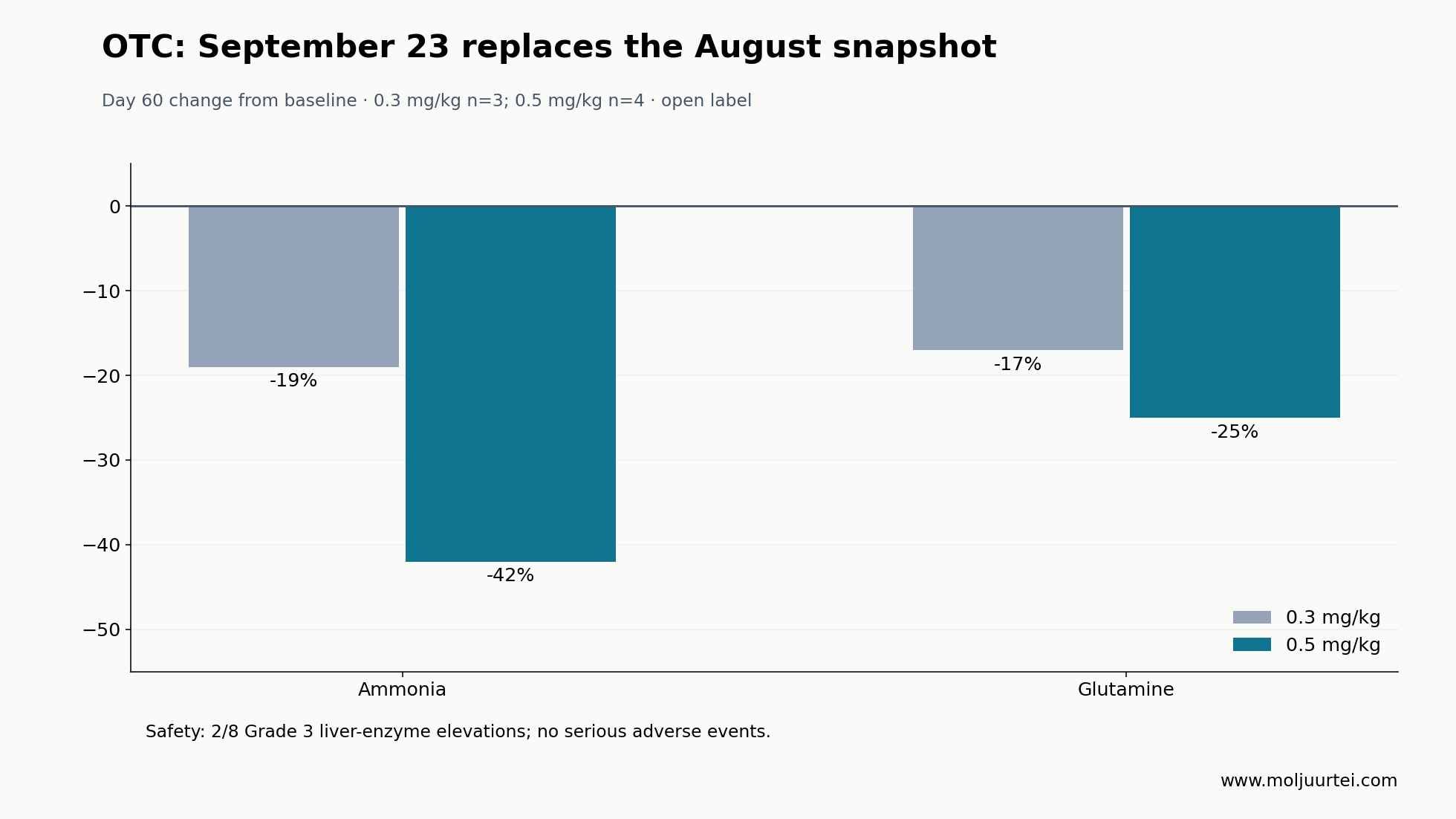
The updated US ARCT-810 study dosed eight participants, four each at 0.3 and 0.5 mg/kg, with five planned infusions every two weeks. Seven were evaluable for efficacy: three at the lower dose and four at the higher dose. One lower-dose participant stopped after the first dose following Grade 2 IV infiltration and a Grade 2 injection-site reaction. All seven evaluable participants were female and white, another limit on generalisation. This small open-label experience cannot establish the effect in severely affected infants.
At Day 60, ammonia declined 19% at 0.3 mg/kg and 42% at 0.5 mg/kg; glutamine declined 17% and 25%. Two of seven had elevated baseline ammonia, and all were within the normal range during treatment; all seven had elevated baseline glutamine, which fell in each. Five of seven had protein intake at least 25% above baseline at some time point, and all gained weight. Lower ammonia despite greater protein intake is mechanistically encouraging, but changing diet, regression to the mean and lack of a control limit attribution. The old August pooled values should not be mixed with these updated cohort-specific results.
Two of eight had Grade 3, non-serious, asymptomatic transaminase elevations that resolved after stopping drug without further intervention. No serious adverse events were reported. “Non-serious” is a regulatory category and does not mean mild: Grade 3 is severe. For a chronic liver treatment, especially one ultimately intended for children, that signal deserves equal prominence with ammonia reductions. LUNAR 2.0’s non-GLP animal findings do not yet demonstrate that the human liver issue has been eliminated.
Management & Track Record — continuity, approvals and control history
Table terminology: 10-Q.
The founders’ continuity since 2013 and KOSTAIVE’s regulatory progress are tangible execution achievements. They do not validate a different drug in a different tissue. The company also navigated a difficult CSL relationship and settlement. The test now is whether management translates platform claims into appropriately designed trials, discloses full patient denominators and funds the expanded plan without losing control of spending. A supplier contract or an experienced chairman cannot substitute for those outcomes.
The original filing review identified adverse internal-control findings for FY2023, the April 2024 replacement of EY by Deloitte with no reported disagreements, and remediation reported in FY2025. That history remains relevant; remediation is not a guarantee against future errors. The earlier late-filing notice cited a technical transmission issue, and a period with the controller acting as principal financial officer preceded Mulroy’s appointment. The current Q2 report bears Mulroy’s signature. Old institutional-ownership percentages and counts of passive filings are dated snapshots, not current ownership or proof of concentrated buying.
Risks — a go decision is not approval
Milestones — what is completed and what remains conditional
Table terminology: IV; IND; OTC; ATM.
Natural-history work such as the CF Foundation’s REACH dataset may inform trial design, but is not automatically an accepted external control. The old November 9 earnings date and consensus estimates are not carried forward without confirmation. A useful catalyst calendar distinguishes a completed presentation, a planned filing, first dosing, a company investment decision and an eventual regulatory decision.
Price Setup — a lower price, still a binary clinical exposure
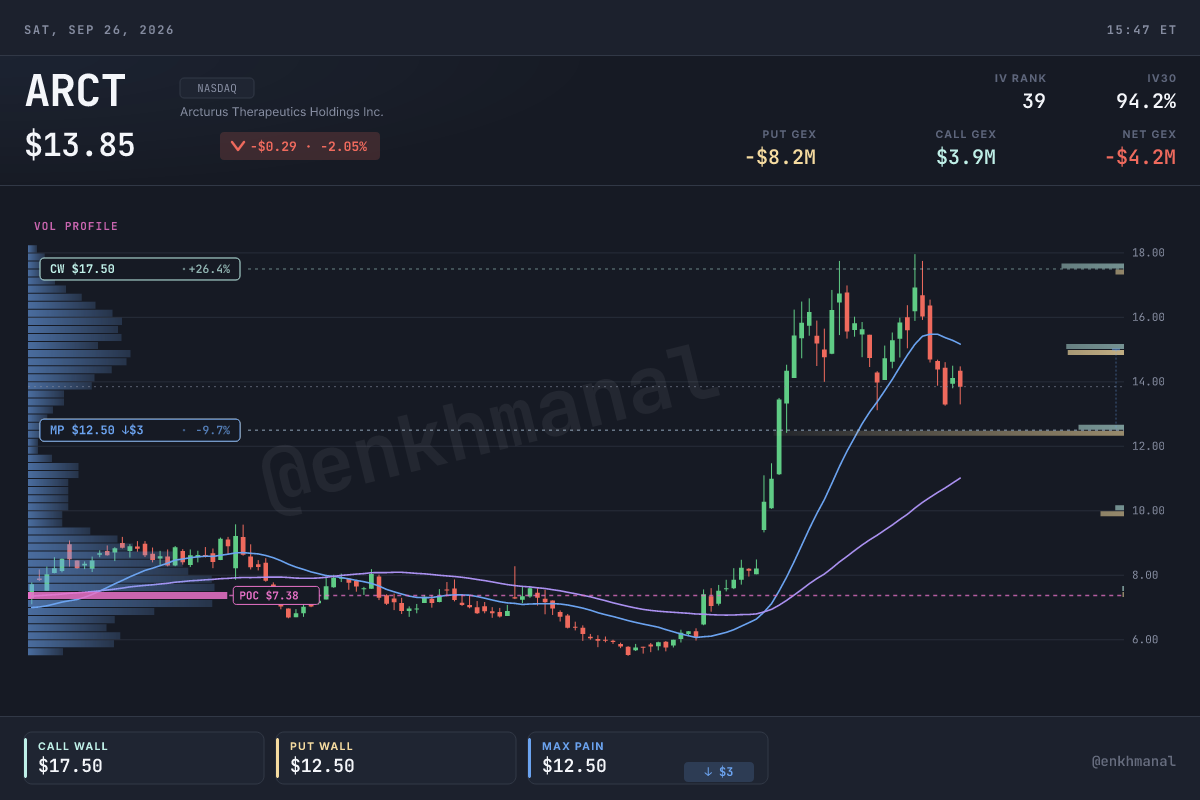
ARCT closed September 25 at $13.85, down 1.9% from $14.12 and 5.3% below the old $14.62 reference. It remains 68.7% above the August 18 close of $8.21 and 14.3% below the August 27 high of $16.17. The 20/50/100/200-session moving averages are $15.17/$11.01/$9.20/$8.34. Price is below its short average but above the longer ones. Sector news and company updates overlapped during the rally; price and volume alone cannot apportion the cause or establish insider conviction.
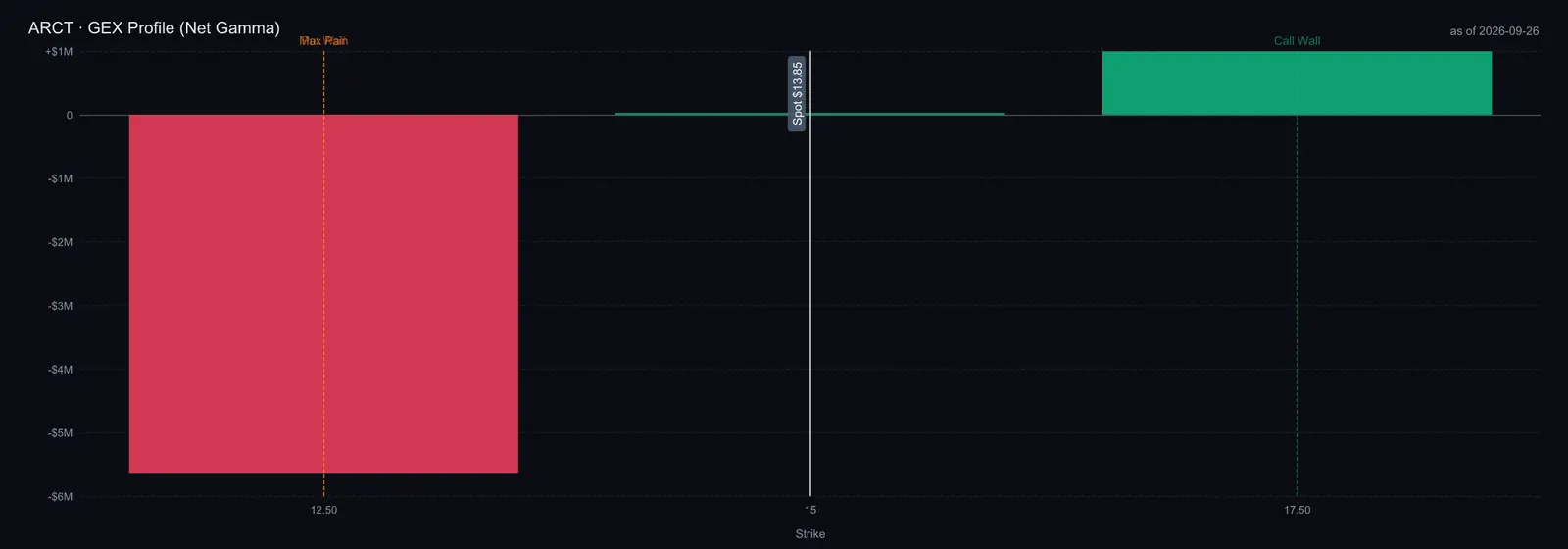
The current gamma estimate is −$4.25M across four expirations, versus the old slightly positive snapshot. Call concentration is at $17.50, put concentration and max pain at $12.50; call and put open interest are 3,938 and 4,426, a 1.12 ratio. There is no reported spot gamma-flip value. The $15 strike-profile transition is not the same metric. These estimates depend on sign assumptions and incomplete options coverage; they do not identify retail buying, dealer direction or a guaranteed support level.
Implied volatility is about 94.15%; the available IV-rank history spans only 35 days and gives 38.6, so it is not a full-year rank. A square-root-of-time calculation implies roughly ±27.0%, or ±$3.74, over 30 calendar days. That is a model-based scale of uncertainty, not a forecast interval with assured coverage; clinical announcements can jump beyond it. Options premiums and a low dollar share price do not make the underlying development risk small.
Valuation — cash is a funding resource, not a floor
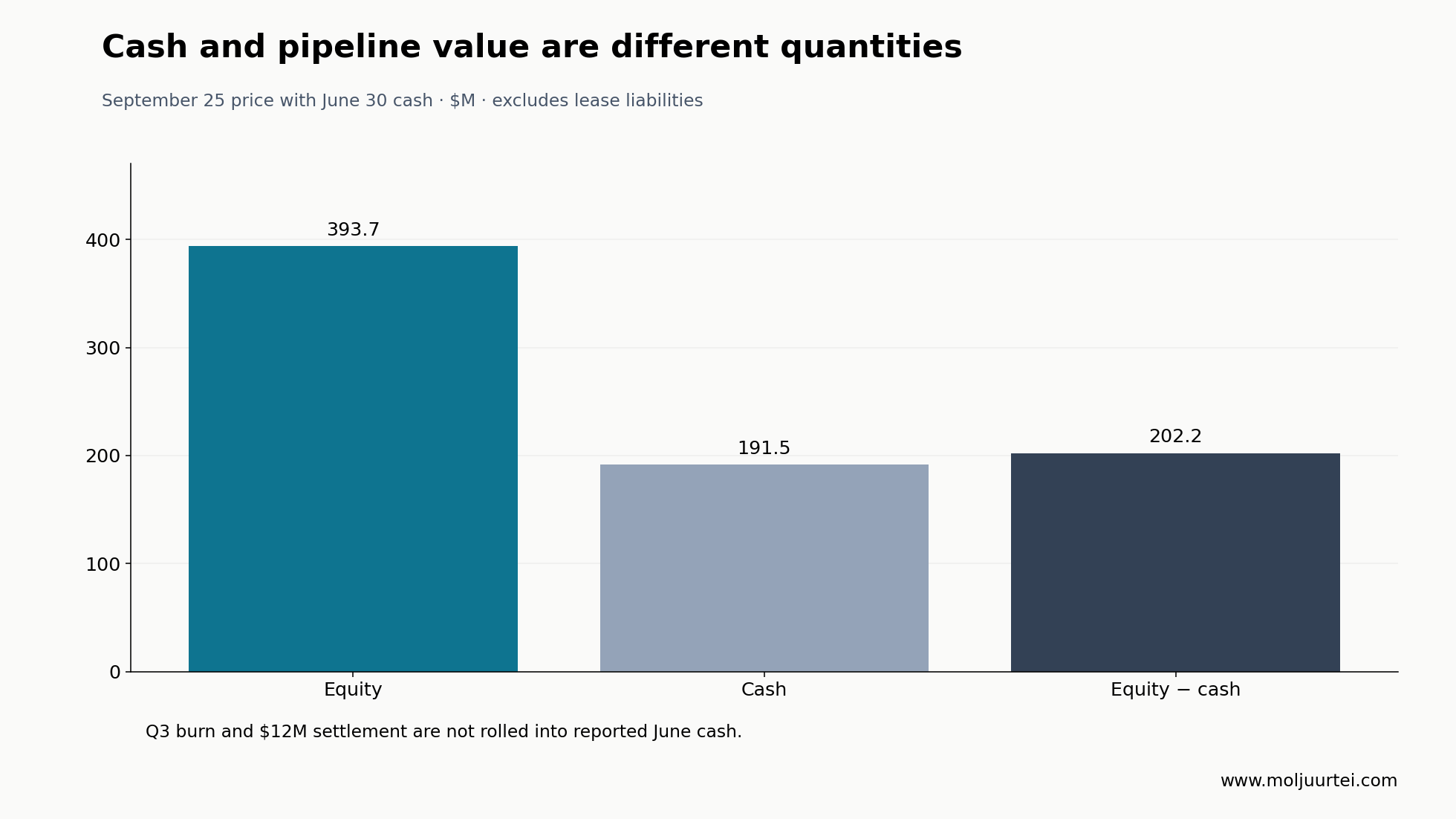
Table terminology: EV.
Equity is 2.06 times reported June cash, and equity less that cash is 2.57 times annualised H1 operating cash use. These ratios describe funding and market expectations; they do not value a drug’s probability of approval. Including the $12M settlement before Q3 burn would reduce the cash-subtracted figure to $190.176M. Subtracting every liability as if it were debt would be incorrect. Cash per share is also not a liquidation floor while trials and overhead continue to consume it.
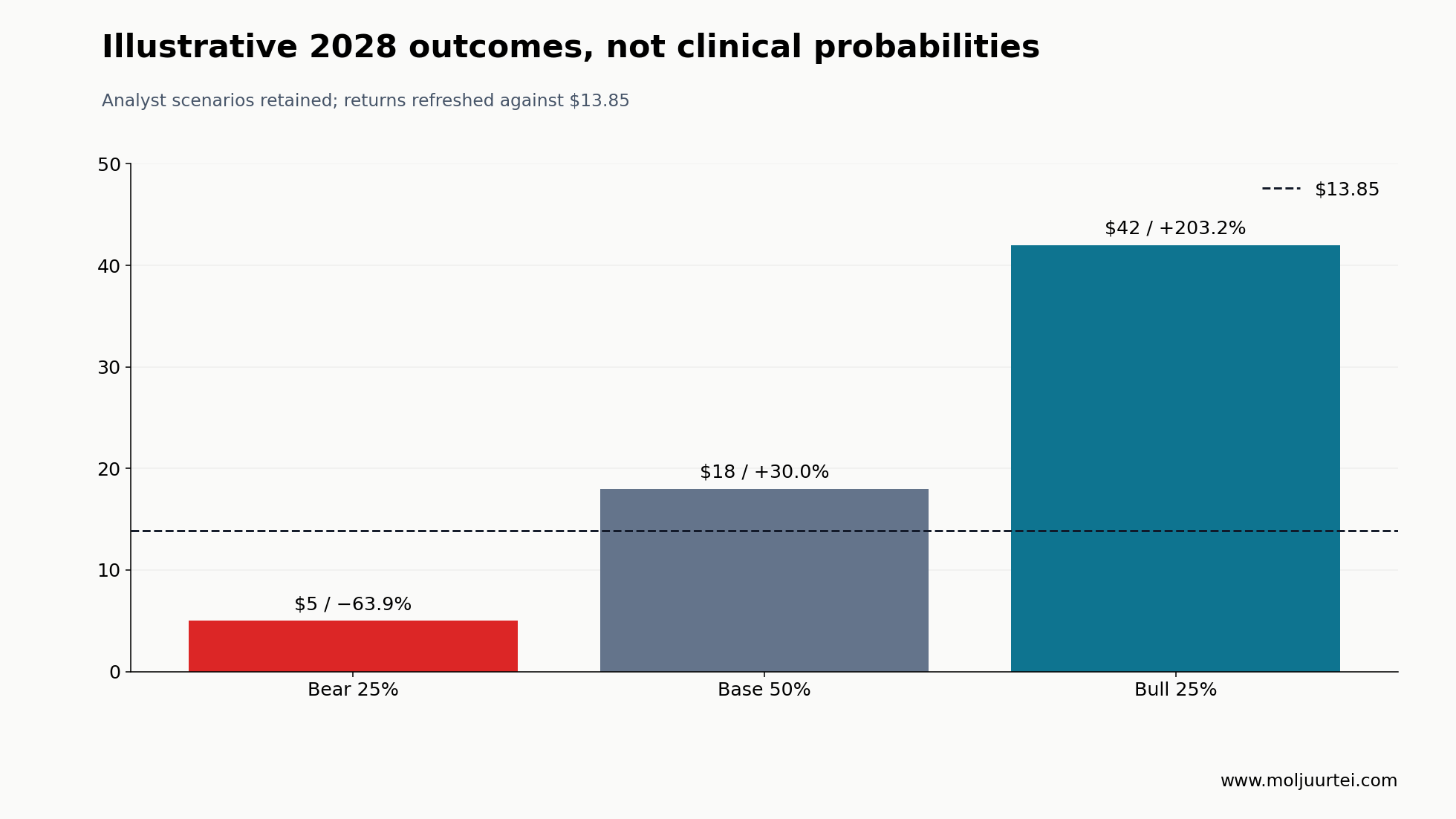
These retained $5/$18/$42 cases are conditional price scenarios, not a risk-adjusted NPV model. The 25%/50%/25% weights produce $20.75, 49.8% above the current price, or about 22.4% annualised over two years. Those weights are judgment, not statistically estimated clinical probabilities. Holding the same equity value but issuing 3.61M additional shares would reduce each per-share outcome by about 11.3%, before considering the value of the new cash. A credible drug NPV would additionally require explicit launch timing, net prices, eligible treated populations, manufacturing costs, development spending and stage-specific probabilities.
The opportunity remains a potentially valuable delivery platform reaching an important evidence window. The September liver update adds a new path, but also resets part of the proof burden; the lung programme still needs functional benefit beyond selected imaging responders. A speculative position before confirmation can capture a rerating, but the amount at risk must reflect the possibility of failure and dilution. This memo does not assume the reader’s holdings or risk budget. The next decision should turn on full clinical evidence, funding terms and per-share economics, not on a competitor’s exit alone.
Sources and method
September 23 update and presentation; Q2 2026 results and 10-Q; historical CF study presentation; Vertex Q1 update; ReCode Phase 2 announcement. Historical annual tables and governance context retain the original SEC filing review. Market prices are through September 25; options and volatility snapshots were retrieved September 26. Clinical statements distinguish company reports, observed data and the author’s interpretation.